Friday, 19 February 2021

Akhaltsikhe

Akhaltsikhe (ახალციხე in Georgian, Ախալցխա in Armenian, Ахалцихе in Russian) is a 16,943 inhabitants town by the small river Potskhovi, in the southern part of Georgia. It's the capital and biggest town of the administrative region of Samtskhe-Javakheti. Akhaltsikhe used to have a majority of Armenian population and even today there's a significant Armenian minority (around 27%). 


How do I arrive to Akhaltsikhe?

  Akhaltsikhe isn't bad connected with other towns in Georgia and neighbouring countries
  • Train: there used to be trains that reached Akhaltsikhe but nowadays the nearest station is located in Borjomi.
  • Bus: there are marshutkas from places like Borjomi (aprox. 1 hour) in Borjomi-Kharagauli National Park, Ninotsminda in Javakheti National Park and Vardzia (aprox. 1 hour 30 minutes), Gori (aprox. 2 hours 30 minutes), Khulo and Kutaisi (aprox. 3 hours 30 minutes), Tbilisi (aprox. 4 hours) or Batumi (aprox. 6 hours). There are also marshutkas to Gyumri (aprox. 3 hours 30 minutes) and Yerevan (aprox. 7 hours) in Armenia.
  • Car: if you rented a car, from Akhaltsikhe it can be reached Abastumani (aprox. 35 minutes), Borjomi (aprox. 50 minutes) in Borjomi-Kharagauli National Park, Bakuriani and Vardzia (aprox. 1 hour 20 minutes), Akhalkalaki (aprox. 1 hour 30 minutes), Ninotsminda (aprox. 2 hours) in Javakheti National Park, Kutaisi and Tbilisi (aprox. 3 hours 10 minutes), Batumi (aprox. 4 hours 45 minutes) and Kutaisi (aprox. 2.5 hours). It could also be reached from Gyumri (aprox. 3 hours), Vanadzor (aprox. 4 hours) or Yerevan (aprox. 5 hours) in Armenia and Ardahan (aprox. 2 hours) or Kars (aprox. 2 hours 40 minutes) in Turkey.

History

  Akhaltsikhe is first mentioned in the chronicles in the 12th century, being the seat of the House of Akhaltsikhe, dukes of Samtskhe Duchy, in the 12th-13th centuries. From the 13th up to the 17th century the city and the whole region of Samtkhe were governed by the House of Jakeli. The city suffered numerous invasions by Mongols, Iranians and Turks, and in 1576 the Ottomans took Akhaltsikhe and made it the residence of pasha. From 1628 the city became the centre of the Akhalzik Eyalet of the Ottoman Empire (being then known as Ahıska). During the Russo-Turkish War of 1828-1829, Russian troops under the command of General Paskevich captured the city and, as a consequence of the Treaty of Adrianople (1829), it was ceded to the Russian Empire. Once in the Russian Empire it was first part of Kutais and then Tiflis Governorates. Akhaltsikhe was again occupied by the Ottoman Empire for several months in 1918. Samtskhe, also known as Meskheti, used to have a majority of inhabitants that are defined as Meskhetian Turks, who were deported in 1944 under Stalin to Central Asia (they made areound 50% of Samtskhe population in 1926). Akhaltsikhe had an Armenian majority population (mostly coming from Kars and Arzrum, in Turkey) with important Georgian and Russian minorities, that was transformed into a Georgian majority with an important Armenian minority population after the fall of the Soviet Union. During the Soviet period Akhaltsikhe was the industrial center of southern Georgia.
 

What can I visit in Akhaltsikhe?

  Akhaltsikhe isn't a very touristic place but it's still a very charming town. Its main streets are Khmaladze, Guramishvili, Kazbegi or Atoneli, being well worth to have a walk along them. Here it can also be a good base to visit the main sightseeing points of Samtskhe-Javakheti.
These are Akhaltsikhe's main attractions:
  • Rabati Castle (9-20; 6₾/ 3₾  adults/ students): fortress built in the 9th century (then known as Lomisa Castle) by Guaram Mampal, son of the King of Tao, according to the Georgian Chronicles. From the 13th to the late-14th centuries it was the capital city of Samtskhe-Saatabago, ruled by the House of Jakeli. The castle resisted the armies of Tamerlane, Turko-Mongol invasions and in 1590 it came under the rule of the Ottoman Empire. Entering the Upper Citadel, it can be visited the main parts of the castle, with more apparent Ottoman influence. It has a traditional Ottoman-style courtyard, Rabati Mosque, a gold-domed Ottoman mosque built in 1752, or St. Marine Church in Rabati (church built in 1865). It was in semiruined state and has been comprehensively renovated, although it feels a bit twisted.
  • Samtskhe-Javakheti History Museum (10-18 Tue-Sun; 3₾/ 1₾  adults/ students): museum that has well-displayed exhibits about the history of the region of Samtskhe-Javakheti, from archaeological finds of Kura-Araxes culture from the 4th-millennium-BC, Chirstian stone carvings, the oldest surviving fragment of the Georgian epic poem The Knight in the Panther’s Skin by Shota Rustaveli to Ottoman and Georgian weaponry. It also has regional costumes from the 18th and 19th centuries. The museum is placed inside Rabati Castle
  • Old Akhaltsikhe Synagogue: Georgian rite synagogue built in 1863 with a beautiful interior of painted wood. It was extensively renovated in 2012 and has a museum where the portraits of the generations of rabbis who have officiated here. Not far from here there's the Jewish Cementery of Akhaltsikhe, that houses tombs that even go back to the 17th century (some have inscriptions in Ladino).
  • Amaghleba Georgian Orthodox Church: nice central-domed church completed in 2010. In front of the church there is a monument of Queen Tamar with a spring, where getting great views of Rabati Castle.
  • Surb Nshan Armenian Apostolic Church: church with an impressive silhouette, regarded as one of the most beautiful Armenian churches in Georgia (the only church donated to the Armenian Orthodox community, apart of the churches of Tbilisi and Yavakhtia). Around the church you can see ancient Armenian tombs, khachkars.
  • Close to Akhaltsikhe, only 11 km south, there's the Sapara Monastery. This monastery complex clinging to a cliff edge is one of the most important sights in the region, with its origin dating back to the 9th century. It was the residence of the House of Jakeli in the 13th century too. The complex has twelve church and among them, the most spectacular ones are Midzinebis Church (earliest building in the complex that is characterised for its patronike, rich carvings and its iconostasis) and St. Saba Church (main church of the complex, from the 13th-14th centuries, that was the residence and crypt of the Jakeli and that has outstanding frescoes).
Rabati Castle
Sapara Monastery


Agara Monastery
On the outskirts of Akhaltsikhe there are plenty of things and places to visit. In the way to Turkey, 12 km far from Akhaltsikhe, the visitor can find the
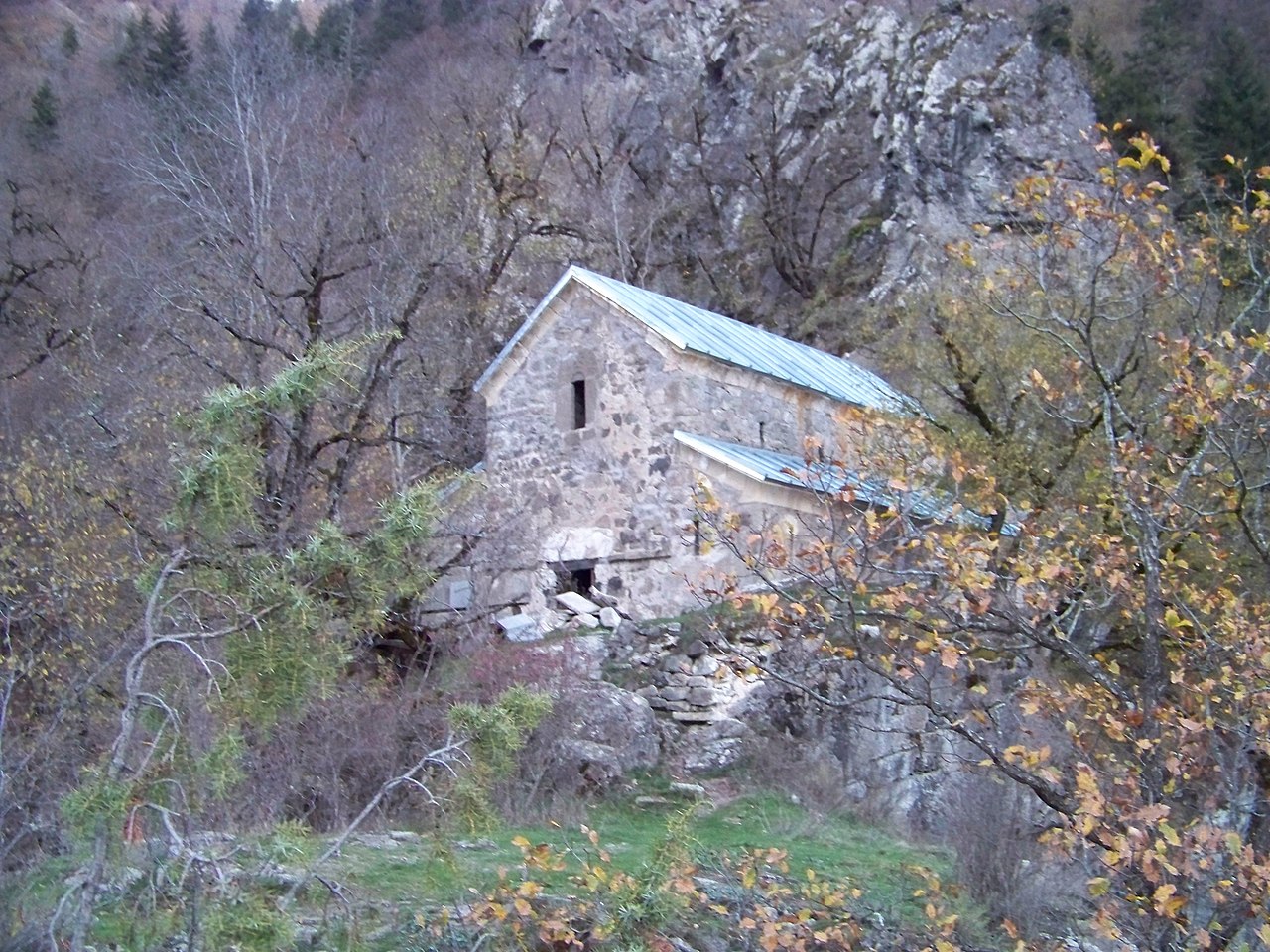
Ghvtismshoblis Church of Vale, a Georgian Orthodox 16th century basilica with three nave and some remains of an earlier 10th-century domed church (such as relief sculptures of laymen, clergy, and equestrian saints as well as cornices and window frames). Decorations are found above each window of the eastern façade and around the entrances, having numerous reliefs. Also close to the Turkish border is placed Jakismani Monastery, a monastery complex that consists of a main church (a hall-church from the 9th century, with stylistically features of churches in Javakheti), two small chapels, and a ruined narthex. Another religious complex in the area is Agara Monastery, a Georgian Orthodox complex that consists of the main church (10th-11th century temple regarded as the largest single church nave in Georgia), the reflector, the 13th-14th century bell tower and other ruins.
Old house in Abastumani
In case of going to the west, there are several places where stopping and discover new sites out of the beaten track. One of them is the town of Abastumani (აბასთუმანი in Georgian), a village with 937 inhabitants that is 30 km far from Akhaltsikhe that is a less modern, cheaper and more authentic alternative to Bakuriani to know the mountains of the Lesser Caucasus. It's an old
Russian-Soviet therapeutic sanatorium founded
in the 19th century for its clean air, to cure the asthma or tuberculosis. Here it's also located the Georgian National Astrophysical Observatory, located in  strange buildings with big domes founded in 1932 (here 558 stars wered discovered until the fall of the Soviet Union).
Zarzma Monastery
Continuing towards Adjara the visitor can stop at
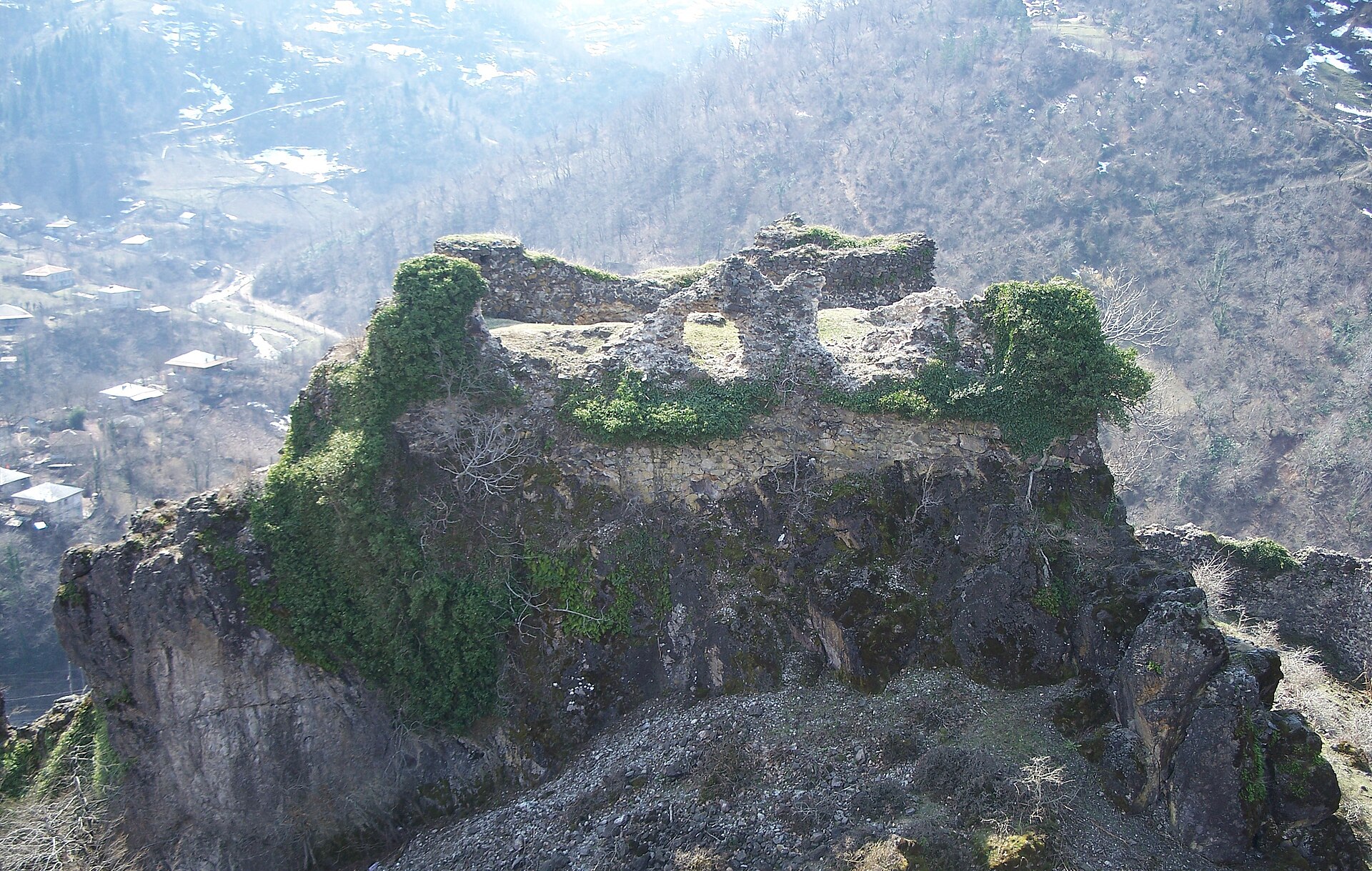
Okros Tsikhe Fortress (14th century fortress that is one of largest medieval fortifications in Georgia, playing a prominent role in the defense of Samtskhe against the invading Ottoman army in 1578), also known as golden fortress; Zanavi Fortress (ruins of a medieval fortress which is difficult to acess); Tchule Monastery (14th century Georgian Orthodox church that is a major religious and cultural center in south Georgia and an example of decline in Georgian architecture and monumental painting due to two hundred years of Mongol dominance), being abandoned by 1595 and repared in the 1930s; and Zarzma Monastery, 14th century monastery complex with a series of buildings dominated by a domed church and a belfry, one of the largest and most beautiful of this period in Georgia. It has a great variety of frescoes, in particular portraits of saints from the 14th century or a series of portraits of Jakeli family and historical figures of the 16th century (including Sargis I, Beka I, Sargis II, Qvarqvare I or Bagrat III of Imereti).


Vardzia
Driving 60 km far from Akhaltsikhe it can be found one of the main sightseeing points in whole Georgia, Vardzia
(10-19; 7₾/ 1₾  adults/ students). This remarkable cave city is both a cultural symbol and a spectacular natural phenomenon, making it one of the highlights of every visit in Georgia. The first fortification here was built in the 12th century by Giorgi III and his daughter, Queen Tamar, established a cave monastery that grew into a holy city housing like 2000 monks, renowned as a spiritual bastion of Christendom’s eastern frontier. A major earthquake in 1283 began the long decline of Vardzia although since the end of Soviet rule it has again become a working monastery, with some caves inhabited by monks. The complex has over 400 rooms, 13 churches and 25 wine cellars, ranging over 13 floors. At the heart of the cave complex is Ghvtismshoblis Midzinebis Church, whose façade is gone but has a beautiful interior (with frescoes depicting New Testament scenes or Giorgi III and Tamar before she married) and a two-arched, bell-hung portico. Vardzia has great views of the surrounding nature too. Nearby it can also be visited Vanis Kvabebi (free), another cave monastery that predated Vardzia by four centuries, although far less visited. Some monks have reoccupied some of the caves, after centuries of abandonment, and it can be climbed up to the little white domed church, high up the cliff, by a series of wooden ladders inside the rock.
Khertvisi Fortress
In the way to Vardzia it's a good idea to make some stops to visit other places. The closest to Akhaltsikhe is Shoreti Monastery, a monastery complex built between the 7th and 15th centuries, notable for mosaic adornments and medieval inscriptions. Then there's Khertvisi Fortress (free). This impressive 10th to 14th century fortress perched on a rocky crag above the meeting of the rivers Paravani and Mtkvari is one of the oldest fortresses in Georgia (according to a local legend, Khertvisi was once destroyed by Alexander the Great). It is composed of the citadel with towers and the lower yard, surrounding the citadel from the south and east. In the road to Vardzia, a few kilometers far from Vardzia, are located the Ruins of
Tmogvi Castle, remains of the once near-impregnable castle by river Kura from the 10th century that was a crucial military stronghold in the region of Javakheti. Shalikashvili family were the last rulers of the fortress in the 16th century. Close to these ruins are Zeda Tmogvi Church (a Georgian Orthodox three-nave basilica built in the reign of Bagrat IV of Georgia, whose façades contain several inscriptions that make mention of historical persons of that time) and Tsunda Church (a Georgian Orthodox temple that dates back to the 12th-13th centuries with rather poors decorations). Around Zeda Tmogvi Church stands an abandoned settlement that was left to ruin after the deportation of local Meskhetian Turks by the Soviet Union in 1944.

Where can I eat in Akhaltsikhe?

  Akhaltsikhe has a humble culinary offer but there are some places where eating in a good way such as the following Georgian food places: the restaurant Mimino (Eqvtime Atoneli 108-2), Old Pub (Orbeliani 2) or the restaurant of Hotel Lomsia [ლომსია] (Kostava 10).

Wednesday, 17 February 2021

Borjomi-Kharagauli National Park

Borjomi-Kharagauli National Park (also know as ბორჯომ-ხარაგაულის ეროვნული პარკი in Georgian) is a 1,093 km² park situated in the Lesser Caucasus in Georgia, between the regions of Samtskhe-Javakheti and Imereti. It covers more than the 1% of the Georgian territory. Its particular uniqueness is diversity of geographical and ecological zones, landscapes, historical monuments and rich flora and fauna. The park has rapidly developing tourist infrastructure, mainly focused around Borjomi (a very popular spa resort).

How do I arrive to Borjomi-Kharagauli National Park?

  Borjomi-Kharagauli National Park is quite well communicated because of the importance that Borjomi has.
  • Train: there are slow trains from Borjomi for Gori (aprox. 4 hours) or Tbilisi (aprox. 5 hours), plus the scenic narrow gauge kukushka train from Borjomi to Bakuriani (aprox. 2 hours 30 minutes).
  • Bus: there are marshrutkas departing from Borjomi's bus station to destinations such as Khashuri (aprox. 30 minutes), Bakuriani (aprox. 1 hour), Akhaltsikhe (aprox. 1 hour), Gori (aprox. 1 hour 30 minutes), Tbilisi (aprox. 3 hours) or Batumi (aprox. 5 hours). From Bakuriani there are also marshrutkas to Kutaisi (aprox. 3 hours), Tbilisi (aprox. 4 hours) or Batumi (aprox. 5 hours).
  • Car: the main entrance to Borjomi-Kharagauli National Park is via Borjomi, that can be reached from places such as Khaskuri (aprox. 30 minutes), Bakuriani (aprox. 35 minutes), Akhaltsikhe (aprox. 55 minutes), Gori (aprox. 1 hour 20 minutes), Kharagauli (aprox. 1 hour 50 minutes), Tbilisi (aprox. 2 hours 20 minutes) or Kutaisi (aprox. 2 hours 25 minutes).
  Once in the Park the best ways to move around the park are the car or simply hiking.  

History

The history of the park dates back to Medieval times when it was used primarily by the local aristocracy for hunting. When Georgia lost its independence and became part of the Russian Empire, the Grand Duke Michael Nicolaievich was given the post of Governor General of Transcaucasia. He found the local beauty of the Borjomi park so impressive that decided to build his personal summer residence there. Noticeable changes to the park came when the Grand Duke Michael restricted any lumbering or hunting without permission, thus laying the foundation for the park's future. In 1995, the Borjomi-Kharagauli National Park was endorsed and created with the support of the NGO World Wildlife Fund (WWF) and the German government, and was officially inaugurated in 2001.

What can I visit in Borjomi-Kharagauli National Park?

  Borjomi-Kharagauli National Park provides the perfect chance to get out into the landscape of the ranges of the Lesser Caucasus (less well known and much lower than Great Caucasus). The visitor has to register in the visitor centers before entering the national park. Most trails are accessible from May to Oct or Nov. Now it will be explained what to do in the park according to the town or village where they are or the nearest one:    
  • Bridge over Borjomula river
    Borjomi
    (
    ბორჯომი in Georgian, Боржоми in Russian): 10,546 inhabitants resort town by Kura and Borjumula rivers in the north of the region of Samtskhe-Javakheti, totally surrounded by thickly forested hills. Borjomi mineral water is very popular, particularly well known in former Soviet Union countries, with mineral water industry being the number one export of Georgia.
    • Borjomi Central Park (10-23; 2₾/ 1₾  adults/ students): mineral water park that dates back to 1850, including the town's original mineral water source,
      Borjomi Central Park
      Ekaterina Spring.
      The rest of the park is full of rides and entertainments by river Kura. The water of the mineral springs of the area are supposed to have curative powers, being therefore a frequent destination for people with health problems.
    • Borjomi Plateau: spot where getting spectacular views over the town, some walking into the pine woods or trying Ferris wheel. It's connected with Borjomi Central Park with a cable car (10-20; 5₾ one way).
    • Borjomi Museum (10-19 from Jun to Sep; 10-17 from Oct to May; 
      Cable car to Borjomi Plateau
      3₾
      ): small museum that shows the history and importance in Georgia of Borjomi. It has some interesting objects and furniture that belonged to Romanov Palace.
    • Ruins of Gogia Fortress: remains of the fortress, first mentioned in the 16th century that belonged to the rulers of Borjomi, the Avalishvilis. It was destroyed by the constant attacks of Lezgians. From here the visitor gets views of Borjomi.
    • Borjomi Mineral Water Bottling Factory: famous water plant embotted plant mineral. It can be requested a visit, to learn more about the embellishment process (in which the water that from the fountain, at 35°C, inflow at -8°C). The factory approximately produces 600,000 bottles a day.
      Borjomi Sulfur Pools
    • Borjomi Administration and Visitor Center (9-18 Mon-Fri, 9-16 Sat-Sun): office where getting registered to get into the national park and getting some information about the area. Close there's National Park Information Trail (2.1 km), a short trail around the office.
    • Only 3 km far from Borjomi Central Park it will be found Borjomi Sulfur Pools (5₾), a group of small, spring-fed swimming pools with a temperature around 27°C. In case of wanting to try one of the spas of Borjomi, the most recommended ones are Hotel Borjomis Kheoba (Shota Rustaveli 107a) or Hotel Firuza (Baratashvili 3).
  • Around Borjomi the visitor can discover some interesting sights. One of them is St. Giorgi Georgian Orthodox Church in Daba, one of the oldest and strongest shrines in Georgia. The church was built in the 14th century, during the reign of king George V the Brilliant
    Timotesubani Monastery
    . Further is located Tori Georgian Orthodox Church, a hall-type built in the late-10th century that has three relief crosses. Currently it's falling into disrepair. But the main sight in this direction is Timotesubani Monastery, a medieval monastic complex that consists of a series of structures built between the 11th and 18th centuries. Its main church is the largest and artistically most exquisite constructed under Queen Tamar. This domed church built of pink stone has an interior with plenty of frescoes from the 13th century, noted for their vivacity and complexity.
  • Romanov Palace
    Likani
    (
    ლიკანი in Georgian, Ликани in Russian): settlement in the Borjomi Gorge that is a popular mountain spa.
    • Romanov Palace: Neo-Moorish style palace designed by Leon Benois in the 1890s for Grand Duke Nicholas Mikhailovich of Russia. The first hydroelectric power station in the Russian Empire was built in 1898 to illuminate this summer palace. In Soviet times, some of the main leaders of the USSR (including Joseph Stalin) often rested here and currently it serves as an official residence of the President of Georgia.
    • Ruins of Likani Monastery: remains of a medieval monastery complex from the 16th century.
      Mtsvane Monastery and Bell Tower
    • Likani Park: elegant imperial park with sanatoriums. It is worth taking a walk through this lugary place to observe some magnificent dachas
    • Close to Likani it can be visited Mtsvane Monastery, also known as the Green Monastery, that consists of a three-nave basilica dated to the 9th-10th centuries. There's also Mtsvane Monastery Bell Tower, a two-storey bell-tower from the 15th-16th centuries. It was abandoned for more than 200 years, restored to Christian use in 2003.
    • From Likani there are three routes than the visitor can take. One of them is Nikoloz Romanov Route (29 km), a hike through coniferous, Colchic sub-tropical and mixed forest that provide scenic viewpoints with scenery of Lesser Caucasus (it's possible to sleep at Lomismta Shelter); another one is Snow Shoe Trail (14.8 km), round-trip that goes through panoramic views along coniferous forest. The third route is Shepherds' Route (42.1 km), that reaches most of the area of the national park.
  • Mariamtsminda
    Another of the trails departing from Likani is
    Nakvalevi Trail (15 km) that reaches Mariamtsminda. It's a medieval Georgian Orthodox church constructed in the 8th-9th century on a high rocky mountain slope. It is known for its 12th–13th-century fresco portrait of the young nobleman named Shota, who is popularly believed to be the contemporaneous epic poet Shota Rustaveli (who penned the epic Knight in the Panther's Skin).
  • There are other hikes further south from Borjomi. The longest of those ones is St. Andrew Route (50.8 km), that goes from Atskuri to the part of Imereti of the national park. The visitor can stop and sleep while taking this route in the following refuges: Amarati Shelter, Sametskhvario Shelter and Sakhvlari Shelter. From this latter shelter it can be done Meghruki Gorge Trail (2.5 km), in which the visitor can explore Meghruki Gorge.
    Atskuri Fortress
  • Driving 30 km far from Borjomi there's Atskuri (in Georgian), 1,539 inhabitants small town, known because Atskuri Fortress, ruins of a fortress on the bank of Kura River, that was built in the 9th century and was an important stronghold for the defense of Georgia during the Middle ages, damaged by the Ottoman Empire in the 16th century. The town has another ruined structure, the Ruins of Atskuri Church, that was one of the largest cathedrals in Georgia in its time. Today only the ruined walls survived into the 21st century and a project of full restoration was launched in 2016. Close to Atskuri is Bieti Georgian Orthodox Church, a ruined church that dates to the late-14th century, whose dome collapsed and only the conch of the sanctuary and pastophoria remained standing (its reconstruction began in 2019).
  • In the western part of the national park it can be hiked Zekari Overpass Route (25.9 km), a route into Colchic sub-tropical forest. While going north from Borjomi it can be walked Untouched Forest Trail (11.4 km), a trail along a virgin forest.
    Nedzvi Managed Reserve
  • In this area it's also located Nedzvi Managed Reserve, a 90 km² reserve that has Caucasus mixed forests that was created to protect and keep the lynx. The reserve has also an important Christian heritage with buildings like (9th-10th century church that is considered to be the Kviriketsmid Monastery founded by Christopher (disciple of Gregory of Khandzta) in the 940s) or Ruins of Nedzvi Basilica (ruined 9th century monastery complex founded by a student of St. Gregory of Khandzta).
  • Kharagauli (ხარაგაული in Georgian): 1,965 inhabitants town, in the region of Imereti, located in a narrow and deep gorge on both banks of Chkherimela river. It was founded as a railway station in the 1870s.
    Ruins of Chkheri Castle
    • Kharagauli Administration and Visitor Center (9-18 Mon-Fri, 9-16 Sat-Sun): office where getting registered to get into the national park and getting some information about the area.
    • Ruins of Chkheri Castle: remains of a medieval fortress built in the 15th-17th centuries, located on a high and rocky mountain. It belonged to the Abashidze feudal family, handed in 1762 to king Solomon I of Imereti. When Imereti uprising against the Russian domination took place, the Russians destroyed the fortress.
    • Frescoes at Ubisi Monastery
      From Kharagauli the visitor can go to the small village of Ubisi (უბისა in Georgian). The settlement is closely linked to Ubisi Monastery
      . The monastic complex comprises a 9th century monastery founded by St. Gregory of Khandzta, a 4-floor tower whose construction dates back to 1141, fragments of a 12th-century defensive wall and several other buildings and structures. The monastery has an impressing and unique cycle of murals from the late-14th century by Damiane, quite influenced by the Byzantine Palaiologan period art. It's also known because of the honey that is produced here.


Bakuriani in winter
Only 25 km far from Borjomi,
in the heart of the region of Samtskhe-Javakheti, it can be visited Bakuriani (ბაკურიანი in Georgian). This ski-resort town with 1,879 inhabitants is the cheapest and most family-oriented of its kind in Georgia (ski season lasts from mid-Dec to Mar), being popular mountain walks in summer too. It used to have a rustic mountain-village vibe but the boom of tourism is eroding it. Main ski zones are Kokhta Gora (lifts: 10-21:30 from mid-Dec to Mar, 11-18 from Jul to Aug; 40₾/ 25₾  adults/ students  per day), a zone on the slopes of Mt. Kokhta (2,157m high), and Didveli (lifts: 10-21:30 from mid-Dec to Mar, 11-18 from Jul to Aug; 40₾/ 25₾  adults/ students  per day), zone with 16km of pistes of blue, red and black runs.
 
Tsromi Georgian Orthodox Church
On the way to
Gori from Borjomi, 30 km far from the latter, the visitor can stop at Khashuri (ხაშური in Georgian), a town with 26,135 inhabitants (9th largest in Georgia) by river Suramula in Shida Kartli. It was founded in 1872 around a railway station, and Stalin's family came from here. The main things to see here are Khashuri Tower (18th century three-storied defensive tower that belonged to the Khidirbegishvilis), St. Nikolozis Georgian Orthodox Church or Khashuri Church, some 19th century churches. Close to the road that connects Gori and Khashuri it can be visited some interesting sightseeing points such as Ioane Natlismtsemlis Georgian Orthodox Church in Khtsisi (church that was built in times of Bagrat III, considered one of the best samples of one-nave churches that has rich ornaments and bas-relieves with animal figures) or Samtsevrisi Georgian Orthodox Church (7th century small dome church in free-cross design whose decorations consist in pommels and cornices around windows).
Kirtsvisi Archangel
But without doubt the highlights in this road route are Tsromi Georgian Orthodox Church and Kintsvisi Monastery. Tsromi Georgian Orthodox Church is 7th century domed church built during the reign of Stephen II of Iberia, representing a beautiful monument of Georgian architecture (whose artistic importance can be compared with Jvari Monastery in Mtskheta). The exterior is modestly decorated and fortified, having an austere interior decoration. Kintsvisi Monastery is a complex located on a forested slope of a high mountain of the Dzama valley whose main church dates back to the 13th century. Its an exceptional example from the Georgian Golden Age period and the monumental mural is one of the largest among the Medieval Georgian artistic ensembles. They represent scenes from the New Testament (particularly remarkable is the so-called Kintsvisi Archangel), as well as portraits of Georgian kings Giorgi III, Tamar and Giorgi IV Lasha.
Cityscape of Surami

Turning off in Khashuri, 8 km far from the town, it can be visited Surami (სურამი in Georgian). This 7,492 inhabitants town, in the border between Imereti and Shida Kartli, is a popular mountain resort that has some things that make it worth a visit. Here it can be seen the Ruins of Surami Fortress, a medieval fortress that is an important work of historical, monumental art (whose importance is provided by being crossroads of two main roads); St. Giorgi of Surami Georgian Orthodox Church (18th-19th century church in the castle complex that has Armenian origin), Kviratskhovlis Church (domed church built in 1998 built on a place where a previous temple used to stand) or Surami Synagogue (temple from 1915 that is located in the Jewish Quarter). Not far from Surami the visitor can reach Nabakhtevi Ghvtismshoblis Church, a 15th century Georgian Orthodox church complex with a hall church and a bell tower. It keeps some damaged but beautiful wall-paintings (some compositions are at the Georgian State Museum of Art).

Where can I eat in Borjomi-Kharagauli National Park?

The main places to eat in Borjomi are located around Robakidze, and some of the available choices are: the cheap Georgian restaurant Bergi (Shota Rustaveli 121), Inka Cafe (9 April  2) or the medium-prize Georgian restaurants Pesvebi [ფესვები] (Erekle 3) or cafe Old Borjomi (Kostava 19).

 
Design by Wordpress Theme | Bloggerized by Free Blogger Templates | free samples without surveys