Showing posts with label Germany. Show all posts

Friday, 23 October 2020

Kellerwald-Edersee National Park

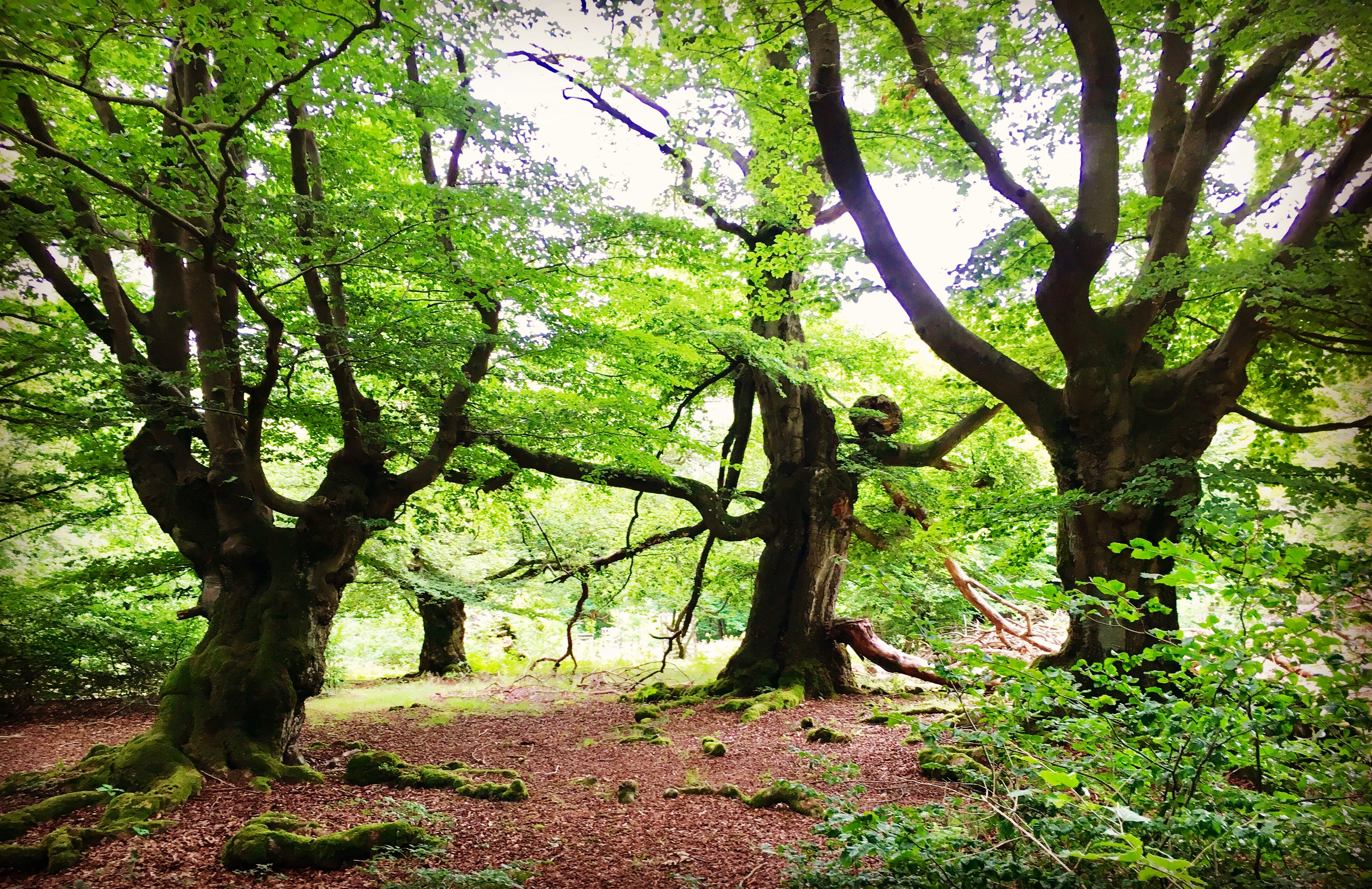
Kellerwald-Edersee National Park (also know as Nationalpark Kellerwald-Edersee in German) is a 57.4 km² park located in the northwestern part of Hesse, in Germany. The National Park was created in 2004 and since the beech forested area of the national park has been part of the UNESCO World Heritage Site, part of the site known as Primeval Beech Forests of the Carpathians and the Ancient Beech Forests of Germany.

How do I arrive to Kellerwald-Edersee National Park?

  Kellerwald-Edersee National Park is close to Kassel so it's quite well connected.
  • Train: the main entrance to the National Park is via Bad Wildingen, that can be reached easily from places such as Fritzlar (aprox. 15 minutes) or Kassel (aprox. 1 hour 10 minutes). Korbach is connected by train with Bad Arolsen (aprox. 15 minutes), Frankenberg an der Eder (aprox. 40 minutes) and Wetter (aprox. 1 hour 5 minutes).
  • Bus: there are buses from Bad Wildungen to Kassel (aprox. 1 hour 15 minutes), stopping in towns like Fritzlar, and to Frankenberg (Eder).
  • Car: the main entrance to the National Park is via Bad Wildingen, that can be reached easily from places such as Fritzlar (aprox. 15 minutes), Kassel and Melsungen (aprox. 35 minutes), Wolfhagen and Bad Arolsen (aprox. 40 minutes), Marburg (aprox. 50 minutes), Bad Hersfeld (aprox. 55 minutes), Alsfeld (aprox. 1 hour), Gießen (aprox. 1 hour 5 minutes) or Fulda (aprox. 1 hour 15 minutes). Once there it can be reached places in the National Park or around such as Edertal (aprox. 10 minutes), Bad Zwesten (aprox. 15 minutes), Waldeck (aprox. 20 minutes), Frankenberg an der Eder and Vöhl (aprox. 30 minutes) or Korbach (aprox. 40 minutes).
  Once in the Park the best ways to move around the park are the car, bike or simply hiking.  

History

The area was mainly part of the County of Waldeck (later the Principality of Waldeck and Principality of Waldeck and Pyrmont), a state of the Holy Roman Empire and its successors from the late 12th century until 1929. In 1349 the county gained Imperial immediacy and in 1712 was raised to the rank of Principality. After the dissolution of the Holy Roman Empire in 1806 it was a constituent state of its successors: first the Confederation of the Rhine and the German Confederation, then the North German Confederation and finally the German Empire, being until 1929 part of the Weimar Republic. It comprised territories in present-day Hesse and Lower Saxony and its capital was Waldeck (until 1655) and Arolsen (from 1655) and it 1929 it was incorporated into the Free State of Prussia and became part of the province of Hesse-Nassau. Between 1908 and 1914 the barrier wall of the Edersee was built and during the flooding, the villages of Asel, Berich and Bringhausen disappeared. On the night of May 17, 1943, a British rotation bomb destroyed the barrier wall and triggered a 6-8 m high tidal wave through the lower Eder and Fulda valleys (hundreds of houses, factories, railroad lines, roads, bridges and trees were destroyed or washed away).
Hesse's only national park is in the Kellerwald south of the Edersee, created to protect the red beech forest, which is characteristic of this region (some areas in the park have beech trees that are over 100 years old). The national park was founded on January 1st, 2004. In 2012 it was clearly recognized that the forest had been withdrawn from forest use for eight years (the removal of the non-native tree species was largely completed) and since June 25, 2011 the protected area has been able to adorn itself with the prestigious title of World Natural Heritage by UNESCO.


What can I visit in Kellerwald-Edersee National Park?

Kellerwald-Edersee National Park is quite popular among people who like taking trails, renting boats or simply enjoying nature, having beautiful towns too. Now it will be explained what to do in the park according to the town or village where they are or the nearest one:    
  • Old Town of Korbach
    Korbach
    : 23,458 inhabitants town in the north from the National Park, part of the German Timber-Frame Road. It's the only town in the federal state of Hesse that joined the Hanseatic League (doing it in 1469). Korbach has a large Altstadt with some interesting half-timbered buildings and other structures.
    • Kilianskirche: Gothic Lutheran church, built between 1335 and 1450, being the oldest church building in Korbach. Its structure is a are reminiscent of St. Maria zur Wiesen Lutheran Church in Soest (North Rhine-Westphalia). It has a splendid altar from around 1340 and a large winged altarpiece from 1527 by Korbacher Franziskanermaler (name given to an anonymous Korbach Franciscan painter).
      Kilianskirche
    • Wolfgang Bonhage Museum (11-16:30 Tue-Sun from Mar to Oct; 11-16:30 Sat-Sun from Nov to Feb; 4€/ 2€  adults/ people under 18): museum that has a collection about the town history. There is also information about mining on the Eisenberg and the 250 million year old fossil finds from the Korbach Column too. 
    • St. Nikolai Lutheran Church: late-Gothic church built between 1395 and 1450, main church in the Neustadt of Korbach. It has a 15th century altarpiece but the main highlight of the church is the large, magnificent wall grave made of alabaster, marble and limestone for Prince Georg Friedrich of Waldeck.
    • Tylen Tower: tower from the 14th century, one of the remains of the still quite well preserved city fortifications. Since 1996 the building has had a roof and a staircase again and the tower can be climbed as part of the city tours.
      Ruins of Eisenberg Castle
    • Korbach Column: 20 m deep filled column in the limestone of a former quarry, considered to be an important fossil deposit. Here it has been discovered numerous fossils of terrestrial vertebrates from the Upper Permian period (about 255 million years ago).
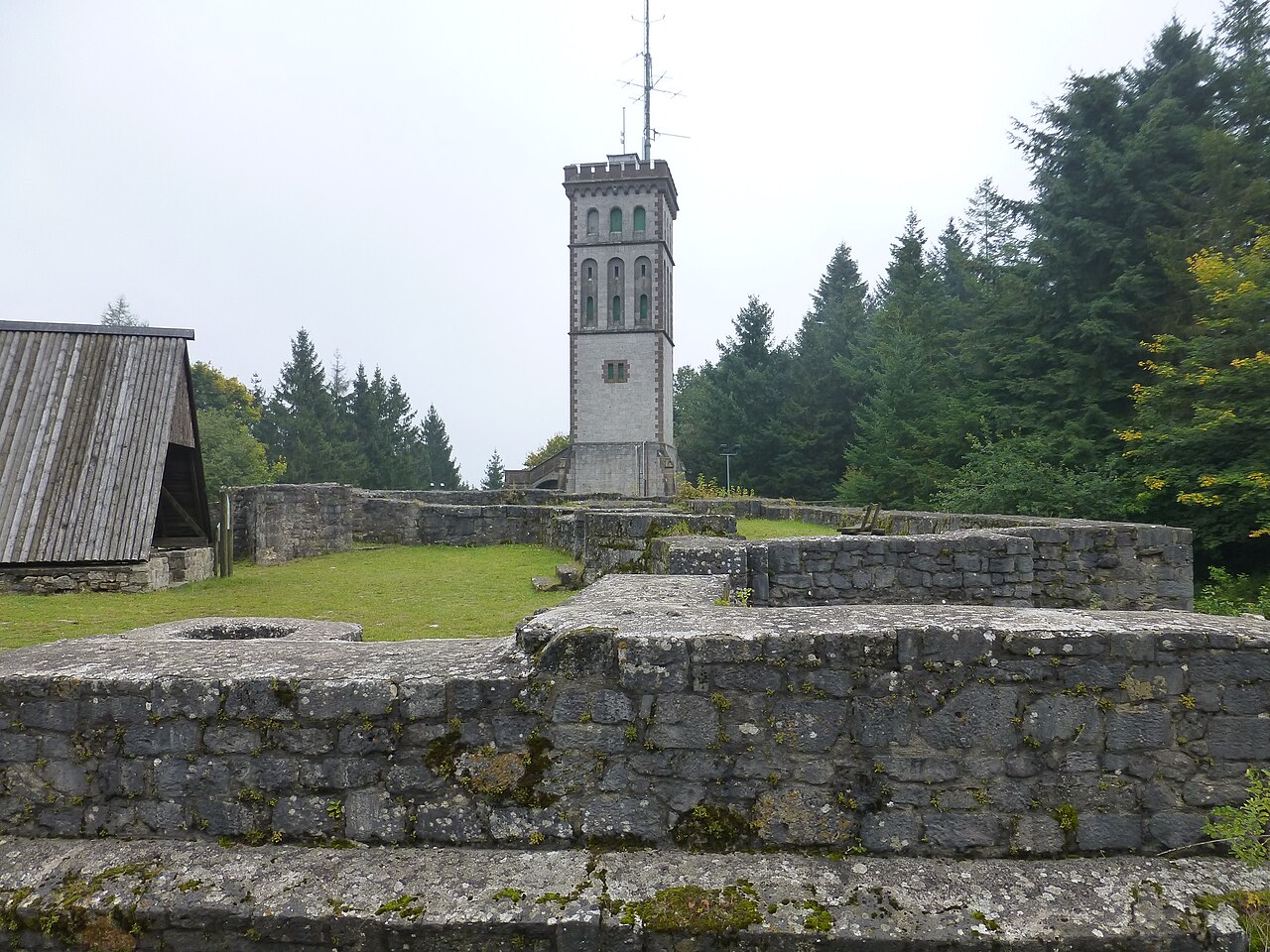
    • In the outskirts of Korbach it can be seen the Ruins of Eisenberg Castle (8-18 from Apr to Oct), remains of the Burg was founded in the 14th century, acquired in the 15th century by the House of Waldeck. The Eisenberg-branch of the House of Waldeck inhabited the castle from 1487 to 1692, when it became extinct.
      Vöhl Synagogue

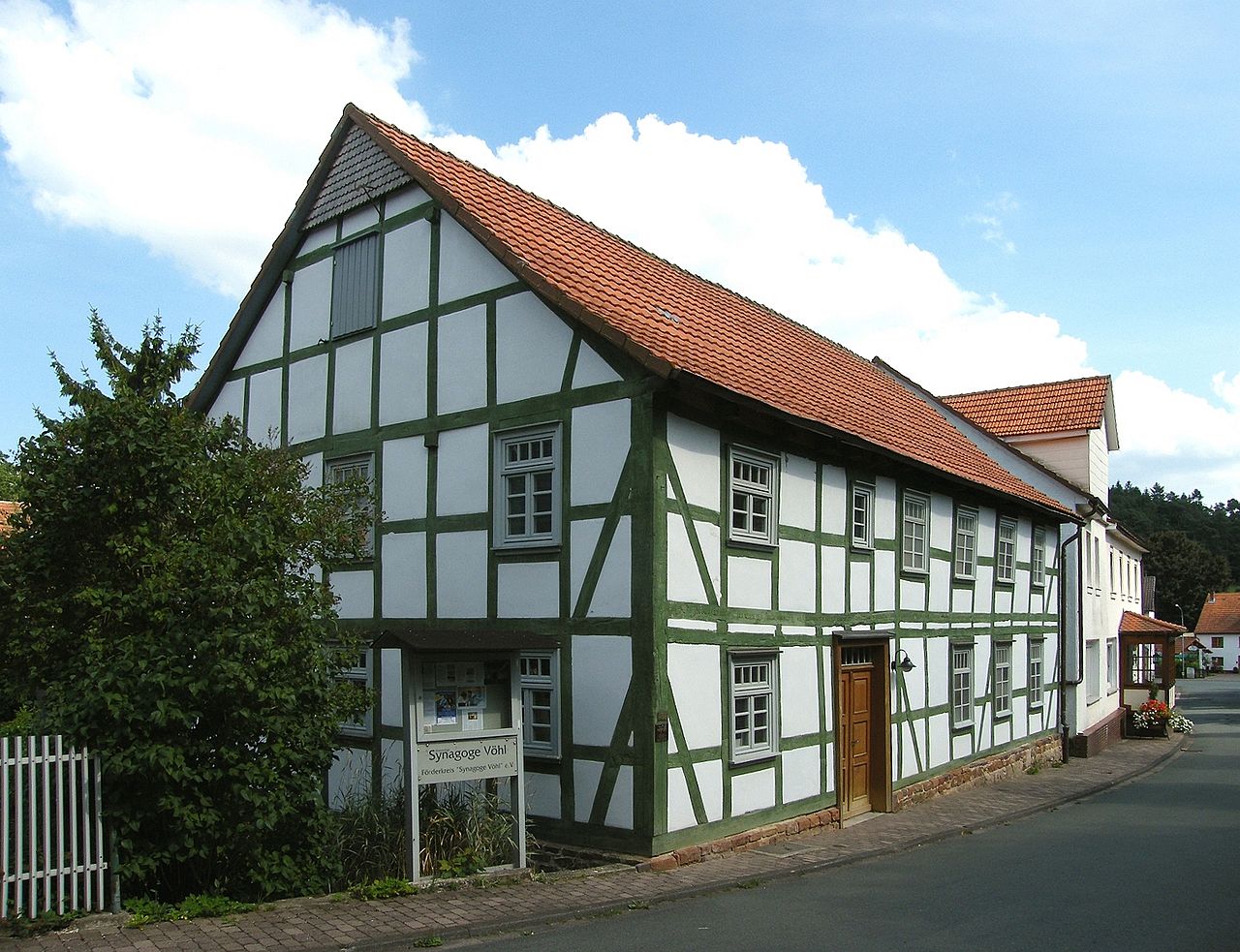
  • Driving south from Korbach the visitor reaches one of the entrances to Kellerwald-Edersee National Park, Vöhl (5,552 inhabitants). This town is a perfect base to discover the national park but it has also other things to offer when having a walk there. It can be seen Vöhl Synagogue (on request), a synagogue from 1827 that survived the years of Nazism and now is used for cultural events; the Lutheran Martinskirche, that was first built in the Romanesque period, or the Hessian Forestry Office in Vöhl (located in a building built around 1386 as a farm for the first Vöhler castle, the becoming a manorial dairy farm).
  • Walbeck Palace
    Continuing next to Edersee it can be found
    Waldeck (
    6,742 inhabitants), a town that was the residence of the Counts of Waldeck (until 1655) who gradually gathered a sizeable realm under their control (elevated to Princes of Waldeck-Pyrmont in 1712). Here it can be visited Walbeck Palace (10-18 from Apr to Oct; 12-16 Sun from Nov to Mar; 5€/ 3€  adults/ kids under 16), a Schloss on the remnants of an 11th century fortification, towering over the town of Waldeck, that was the ancestral seat and residence of the Counts of Waldeck. Since 1734 it was a state penitentiary and in subsequent years was used as state archive, forestry office and in 1906 a hotel. The town has also a nice beach, Edersee Bathing Beach. Not far from Walbeck it can be found Kahle Haardt,
    Edersee
    a mountain located on the Scheid peninsula that provides one of the most beautiful views of the Ederse (seeing the reservoir and the cellar forest opposite). It is also known for its ancient gnarly forest. A bit further can be found the Ruins of
    Ober Werbe Monastery, remains of a Romanesque building from the 12th century (that ceased to be a monastery when the Reformation reached Hesse and whose decline began after the Thirty Years War) that offers a wide view of the village and the surrounding area.
  • There's a long route for bikes, Edersee Bicylce Route (46.8 km), that goes along the perimenter of Edersee. This reservoir is the core of the national park, being the 2nd largest area and the 3rd largest volume in Germany, and is located on Eder river, a tributary of river Fulda.
  • Edertal (6,210 inhabitants): town by river Eder that is located in the south shore of the Edersee and its dam.
    • Edersee Dam
      The Crazy House Edersee
      (10-19 Tue-Sun from Apr to Oct; 11-16 Sat-Sun from Nov to Mar; 5€/ 3.50€/ free  adults/ kids under 14/ kids under 7):
      completely upside-down detached house that results in some interesting photo motifs against gravity.
    • Edersee Dam: hydroelectric dam spanning the river Ederthat was constructed between 1908 and 1914. Today it generates hydroelectric power and regulates water levels for shipping on the Weser river. At low water in late summers of dry years the remnants of three villages (Asel, Bringhausen, and Berich) and a bridge across the original river bed can be seen, Asel Bridge.
    • Sperrmauer Museum (11-17 from Apr to Oct; free): small museum in the former village of Hemfurth that commemorates the attack on the dam wall in World War II under the Operation Chastise (was intended to seriously affect the power supply of the Third Reich) and the reconstruction of the barrier wall too.
      TreeTopWalk
    • Edersee Wildlife Park (9-18): spacious wildlife park shows the animals in natural enclosures (including red deer, fallow deer, mouflon, bison, wolves, lynxes, ibexes, otters and wild horses). There is a petting zoo for children and it will be loved by them
    • TreeTopWalk (10-18 from Apr to Oct; 8.50€/ 4.50€/ free  adults/ people under 18/ kids under 4): 230 m long treetop path through the crowns of the beech forest above the Edersee. The highlight of the route is the panorama platform with a view of the lake.
    • From the town depart some routes such as Affolderner See Trail (12.7 km), a moderate round trail that goes along the perimeter of Affoldener See, considered an important bird sanctuary and used
      Affoldener See
      as a fishing area
      too, and crossing Edersee dam and going next to
      Peterskopfbahn (funicular railway that overcomes in 10 minutes an altitude difference of 290 m); or Goldgräberpfad Trail (9.7 km)
    • Next to the last mentioned trail it can be visited the former village of Kleinern, currently part of Edertal. It can be seen Kleinern Lutheran Church, a Baroque church from 1681 that has a linden wood altar with tempera painting built before the Reformation (1521), and Kleinern Dorfbrunnen, octagonal fountain from 1904 that has medicinal water.
      Views from Quernst Chapel

  • In the southwestern part of the park it can be found Frankenau (2,902 inhabitants). From here it can be the side of the national park that has the best forests and taking some of the most interesting trails. Some of them are Elsebach Round Trail (5.8 km), route by river Elsebach, Fahrentriesch Round Trail (8.2 km), Harbshausen Round Trail (11.1 km), Ringelsberg Round Trail (11.4 km) or Hochspeicherbecken Eder Trail (17.4 km), the most difficult one of among the previously mentioned. Going to Quernst Chapel, newly built wooden chapel from where there is a beautiful vantage point with a view of the Rothaar Mountains, where it can be seen the foundation walls of the former church too.
    Bad Wildungen
  • Bad Wildungen: 17,264 inhabitants spa town, part of the German Timber-Frame Road, that is a historic half-timbered town on a hilltop with a nice Marktplatz. The town was one of the seats of the County (and then Principality) of Waldeck. Here it's located Kellerwald-Edersee National Park Administration (10-18 from Apr to Oct; 10-16:30 Thu-Sun from Nov to Mar).
    • St. Nikolaus Lutheran Church in Bad Wildungen: late-Gothic church from the 14th century that has a tower which dominates the townscape. The most outstanding piece in the church is an impressing altarpiece from 1404 by Conrad von Soest, Wildunger Altar, an important work of German panel painting.
      Interior of St. Nikolaus Lutheran
      Church in Bad Wildungen
      The church hosts the
      tombs of the Counts of Waldeck-Wildungen (like the Renaissance tomb of Count Samuel von Waldeck or the Baroque tombs of Count Josias II von Waldeck and Prince Karl August Friedrich von Waldeck). At the entrance there's a rose bush commemorating the victims of the witch trials (around 79 people).
    • Bad Wildungen Town Museum (14-17 Tue-Wed and Sat-Sun): museum that deals the history of the town but also the regional prehistory, specially focused in the Ice and Stone Ages.
    • Friedrichstein Palace
      Friedrischstein Palace
      (10-17 Tue-Sun from Apr to Oct; 10-17 Fri-Sun from Nov to Mar; 3€/ 2€/ free  adults/ reduced/ people under 18): Baroque Schloss, located on a hill opposite the old town, with a bright yellow façade, originally built as a Gothic castle by Count Josias II von Waldeck. It was replaced the current palace in the mid-17th century but its rich interior was lost when the royal family moved to the palace in Bad Arolsen in the beginning of the 18th century. It keeps the splendid stucco work by Andreas Gallasini and the ceiling paintings by Carlo Caselli. Now it hosts a extensive collection of the Hessian military and hunting history of the Hessian
      Halloh Pastoral Forest
      State Museum in Kassel
      .
       
    • Bad Wildungen Kurpark: spa park, whose the complex is the largest spa park in Europe (50 hectares) and stretches with the near-natural green bridge over a wooded valley up to the Reinhardshausen district. In the park there is the Wandelhalle, home of the mineral bath QuellenTherme.
    • Halloh Pastoral Forest: 3.4 hectare forest monument (just 1 km southwest of the village of Albertshausen) that can only be reached on foot or by bike.
    • In the way between Bad Wildungen and Bad Zwesten the visitor can stop a bit at Braunau Lutheran Church, a church located in Braunau district of Bad Wildungen that dates back to 1728. Its west tower is crowned with a hood and a lantern.
  • Bad Zwesten
    Bad Zwesten
    :
    3,813 inhabitants spa town with a mineral spring that makes it popular among spa-lovers.
    • Bad Zwesten Lutheran Church: fortified church with origin in the 15th century that has a nice tower with loopholes and parts of it have a defensive wall, with loopholes too.
    • Bad Zwesten Town Museum (15-16:30 first Thu and thrid Sun of the month): small museum that exhibits the local history and life and living in the old days. It hosts temporary exhibitions too. 
    • Bad Zwesten Kurpark am Kurhaus: relaxed spa park that is nice to have a walk in sound adventure park, a rose garden, various ponds and a bowling green.
      Zwesten Palace
    • Zwesten Palace: two-storey Schloss erected in 1782  for Wilhelm Treusch von Buttlar (Hesse-Kassel head hunter) in Neoclassical style, made of plastered half-timbering. Today both the castle and the Kavaliershaus are privately owned  (in the Kavaliershaus there is a hotel with a spa)..
    • Ruins of Löwenstein Castle: remains of a Burg built in the 13th century by Wernher von Bischoffshausen, later belonging to Löwenstein family, an important player in Hesse politics (having non-aggression pacts with the Landgrave of Thuringia and the Counts of Waldeck). The castle was transformed into a Schloss in the 17th century (although abandoned a century later) and today it remain a renovated tower.
    • A good choice to spend time in the town is talking Bad Zwesten Round Trail (7.5 km), a trail that visits the most important sights in the town. 
      Haina Monastery
  • Going 15 km west, towards Frankenberg, it can be found Haina (Kloster), a 3,444 inhabitants town that is known because of Haina Monastery (11-17 Tue-Sun from Apr to Oct), a former Cistercian monastery built in the 13th and 14th century in Gothic style (one of the earliest buildings in Germany in this style). The monastery was dissolved in 1527 by Landgrave Philip I when the Reformation took place, turning the facility into a hospital (today a psychiatric clinic is located on the monastery grounds). It also has a English style garden.
  • Frankenberg an der Eder: 17,689 inhabitants town on Eder River that used to be a fort (especially important under the Franks in the Saxon Wars),
    Town Hall of
    Frankenberg an der Eder
    being a founded as a town by the Thuringian Landgrave in the 13th century. It have many half-timbered houses
    and has a very beautiful square, Obermarkt.
    • Town Hall of Frankenberg an der Eder: half-timbered town hall built between 1509 and 1513, known as the town's landmark. It has 10 towers, that stand for the 10 guilds that used to exist in Frankenberg, and the front is decorated with three piggyback figures in the 16th century.
    • Liebfrauenkirche: three-aisled Lutheran church in Gothic style whose construction started in 1286 on the model of the Elisabethkirche in Marburg. It suffered a fire in 1478 and was rebuilt under Landgrave Heinrich III, transformed into a Protestant church after the Reformation.
      Liebfrauenkirche
      Its most spectacular part is Marienkapelle des Tyle, that has a stone high altar wall completed around 1380.
    • Frankfenberg Town Museum (14-17 Wed and 13-17 Sun): museum about the local history that is located in a former Cistercian monastery, St. Georgenberg Monastery, whose structure of which dates from the 13th to 17th centuries.
    • Thonet Museum (9-17 Mon-Fri, 14-16 Sat; free): museum of the company of furniture designer and manufacturer Michael Thonet  that shows historical furniture that has been produced in Frankenberg since 1889.
Arolsen Palace
Around the National Park it can be visited many interesting towns that are worth a visit.
Exploring the north of Hesse it can be found the town of Bad Arolsen (15,382 inhabitants), a spa town in the north of Hesse that was the residence town of the Princes of Waldeck-Pyrmont (from 1655 until 1918) and the capital of the Waldeck Free State (until 1929). The International Tracing Service has its headquarters in Bad Arolsen too. Bad Arolsen has a cute Baroque style Alstadt, mainly located around Große Allee. The main sightseeing point is Arolsen Palace (10-17 Fri-Sun; 8€/ 7€  adults/ reduced), a Baroque style Schloss that was built during the early 18th century. The palace keeps a good 18th century library and original furniture. It was the birthplace of Princess Emma of Waldeck and Pyrmont (who became Queen consort of the Netherlands during the late 19th century). It's still inhabited by the Prince of Waldeck and Pyrmont and his family and works as a museum about the history of Bad Arolsen too. It also has a nice English style garden. On the outskirts of the town there's the reservoir Twistesee.
Marktplatz, Wolfhagen Old Town Hall and
Wolfhagen Lutheran Church
Driving 15 km from Bad Arolsen and 23 km west of Kassel the visitor reaches Wolfhagen, a
13,022 inhabitants town on the German Timber-Frame Road. It has a lovely old town with half-timbered buildings and smaller remains of the town wall. The most beautiful urban space is the cozy Marktplatz, a square where it's located Wolfhagen Old Town Hall (today a hotel and a restaurant), and a fountain that shows a scene from the fairy tale The Wolf and the Seven Young Goats. The most important church in the town is Wolfhagen Lutheran Church (8-18 from Apr to Oct; 9-17 from Nov to Mar), a Gothic church from the 14th century that includes other styles with parts that are worth to see such as the nice choir windows from 1691, glass windows by Hans-Gottfried von Stockhausen and the west portal on the tower. Another interesting place is Wolfhagen Castle, a partially lost Burg founded in the 13th century by Konrad von Thuringia that was demolished in the 17th century. Currently the nearby building hosts Wolfhagen Regional Museum (10-13 and 14-17 Tue, 14-17 Sat-Sun; 3€), a museum that provides information about the history of the town and region. Other things to visit in Wolfhagen are Ruins of Helfenberg Castle (abandoned Burg that was built by the brothers Heinrich and Eberhard II von Gasterfeld in the early 13th century, whose descendants called themselves Herren von Helfenberg, destroyed in that century) or the modern St. Maria Catholic Church.
Marktplatz, Fritzlar Old Town
In the east of the national park, not far from Bad Wildungen, it can be reached Fritzlar, a
14,733 inhabitants town with historical importance. The town has a half-timbered old town, including a Marktplatz with beautiful buildings, that is ringed by a wall with numerous watch towers. The landmark of its Alstadt is St. Peter Catholic Church (9-17 Mon-Fri, 9-16 Sat, 12-16 Sun; free), a Dom with a mixture of Romanesque and Gothic styles (although the external appearance is completely Romanesque) whose construction began in the 11th century. It was first built by Boniface around 723, continued in 732 under Wigbert that were destroyed by the forces of Rudolf of Rheinfelden in 1079 during his confrontation with Emperor Heinrich IV.  It can also be visited the remnants of the city wall, still largely preserved, such as the Graue Tower (10-12 and 14-17 from Apr to Oct; 2€), a grey defensive tower that can be climbed as a viewing tower, or Greben Tower. The town has the oldest officially mentioned and still used town hall in Germany, Fritzlar Town Hall, dating back to 1109. To get to know deeper the town, particulary to know the isolation it suffered for being Catholic (because it was controlled by the archbishopric of Mainz) it can be visited Fritzlar Regional Museum (15-17 Mon, Thu-Fri; 2€), a museum that shows the history of Fritzlar from prehistory and early history and its folklore placed in the Hochzeitshaus (a stately half-timbered building from around 1580-1590, one of the largest half-timbered houses in Hesse from this period).

Where can I eat in Kellerwald-Edersee National Park?

The culinary offer of the park is diverse isn't very large but the visitor can eat at places like Zum Waldbölker (Edertal) or Hofcafé am Nationalpark (Gellershäuser Straße 12, Bad Wildungen). Other choices in Bad Wildungen are the German restaurant Koppenretscher Wirt (Vor der Linde 12-14a) or the Hessian restaurant Waffelhaus (Bilsteinstraße 67). The best ideas to eat in Frankenberg (Eder) are Cafe Nostalgie (Neustädter Straße 50), the bakery Eckhardt (Bottendorfer Straße 49) or the traditional Gasthaus Vöhl (Neustädter Straße 20).

Monday, 19 October 2020

Kassel

Kassel is a 202,137 inhabitants city by river Fulda in the north of Hesse, in Germany. The former capital of the state of Hesse-Kassel has many palaces and parks, including Bergpark Wilhelmshöhe (a UNESCO World Heritage Site since 2013), and its 3rd largest city. It's a very multicultural city and is home of the University of Kassel. It's also a good starting point to visit the north of Hesse.


How do I arrive to Kassel?

  Kassel is well connected with other cities in Hesse and in its surrounding federal states.
  • Train: there are often trains (mainly departing from the station Wilhelmshöhe) to important destinations within Hesse like Melsungen (aprox. 25 minutes), Fulda (aprox. 30 minutes), Bebra (aprox. 50 minutes), Bad Hersfeld and Marburg (aprox. 1 hour), Hanau (aprox. 1 hour 10 minutes), Gießen (aprox. 1 hour 20 minutes) or Frankfurt am Main (aprox. 1 hours 25 minutes). It is easy to reached from places in North Rhine-Westphalia such as Paderborn (aprox. 1 hour 5 minutes) or cities in Lower Saxony such as Göttingen (aprox. 20 minutes), Northeim (aprox. 40 minutes), Hannover (aprox. 55 minutes) or Brunswick (aprox. 1 hour 15 minutes).
  • Bus: there are buses to many cities in Hesse and neighbouring states departing from Wilhelmshöhe station such as Dortmund (aprox. 2 hours), Frankfurt am Main (aprox. 2 hours 30 minutes), Essen (aprox. 3 hours), Hannover (aprox. 3 hours 5 minutes), Cologne (aprox. 3 hours 25 minutes), Leipzig (aprox. 4 hours) or Berlin (aprox. 7 hours 30 minutes).
  • Car: having a car many destinations can be reached easily such as Melsungen (aprox. 30 minutes), Bad Hersfeld and Bebra (aprox. 55 minutes), Kellerwald-Edersee National Park (aprox. 1 hour), Alsfeld (aprox. 1 hour 10 minutes), Fulda and Marburg (aprox. 1 hour 15 minutes), Gießen (aprox. 1 hour 30 minutes) or Frankfurt am Main (aprox. 2 hours 15 minutes). It is easy to reached from places in North Rhine-Westphalia such as Paderborn (aprox. 1 hour 10 minutes) or Detmold (aprox. 1 hour 30 minutes) or places in Lower Saxony such as Göttingen (aprox. 40 minutes), Northeim (aprox. 55 minutes).
Kassel is a wide city so, apart from moving walking or by bicycle, the visitor can use the local tram system.

History

Kassel was first mentioned in 913 AD as the place where two deeds were signed by King Conrad I (as a fortification at a bridge crossing the Fulda river called Chasella). In 1189 Cassel had already city rights and the city gained importance when, in 1567, the Landgraviate of Hesse (until then centered in Marburg) was divided among four sons: Hesse-Kassel became one of its successor states, with capital in Kassel and becoming a center of Calvinist Protestantism in Germany. In 1685, Kassel became a refuge for 1,700 Huguenots who found shelter under Landgrave Charles (in the new borough of Oberneustadt). In the late 18th Century, Hesse-Kassel became infamous for selling mercenaries to the British crown to help suppress the American Revolution. In the early 19th century, the Brothers Grimm lived in Kassel, where they collected and wrote most of their fairy tales there. At that time, around 1803, the Landgraviate was elevated to a Principality and its ruler to Prince-elector. Shortly after, it was annexed by Napoleon and in 1807 it became the capital of the short-lived Kingdom of Westphalia (under Napoleon's brother Jérôme) but the Electorate was restored in 1813. After the Austro-Prussian War the principality was annexed by Prussia in 1866, being part of the new province of Hesse-Nassau. Kassel ceased to be a princely residence but soon developed into a major industrial center and a major railway junction (having the largest railway locomotive manufacturer in Germany, Henschel & Son). In 1870, after the Battle of Sedan, Napoleon III was sent as a prisoner to the Wilhelmshöhe Palace and during WW1, the German military headquarters were located in the Wilhelmshöhe Palace. In the late 1930s Nazis destroyed the local synagogue and in WW2, Kassel was the headquarters for Germany's Wehrkreis IX, and a local subcamp of Dachau concentration camp (therefore it suffered severe bombing, destroying 90% of the downtown). After the war most of the ancient buildings were not restored, rebuilt in the style of the 1950s.

Kassel's top 7

If you have little time, here's a list of the 5 things to do and places you can't miss in the city. 
  1. Bergpark Wilhelmshöhe. 
  2. Hercules Monument.
  3. Wilhelmshöhe Palace.
  4. Löwenburg.
  5. Fridericianum.
  6. Karlsaue City Park and Orangery.
  7. Museum for Sepulchral Culture.

What can I visit in Kassel?

  Kassel suffered an important destruction of its old town during WW2, having to be rebuilt after the war. Some of the nicest parts of the center are Friedrichsplatz (one of the largest inner-city squares in Germany that used to be much more spectacular), Treppenstraße (the first pedestrian zone in Germany, that still preserves the sober flair of the 1950s) or the shopping street Königsstraße. Every five years it takes place the art festival documenta, world-wide known festival specialised in Contemporary art.
These are Kassel's main attractions:
  • Fridericianum
    Fridericianum
    (11-18 Tue-Sun; 6€/ 4€/ free  adults/ reduced/ people under 18): museum built in 1779 by the architect Simon Louis du Ry for Landgrave Friedrich II, considered one of the oldest public museums in Europe. It originally housed the state library of Hesse and the art collections of the Hessian landgraves but when Jérôme Bonaparte became King of Westphalia (and Kassel was named the capital of the kingdom), it was repurposed as the first parliamentary building in German, being recovered later as a museum. The Brothers Grimm, Jacob and Wilhelm, were employed at the library too. It's the central point of the documenta every five years and hosts changing exhibitions of contemporary art.
    Trees part of 7000 Eichen by J. Beuys
    Next to the Fridericianum stands the Zwehren Tower, which was built in 1330 and used to be part of the town fortification of Kassel.

  • documenta Archiv (9-19 Tue, 9-16 Wed-Fri): collection that keeps the extensive volume of material that is regularly generated during documenta. The heart of the archive’s collection comes from the files and materials of the documenta organization, as well as video and image archives. Few of the works exhibited at various documentas remained as purchases in Kassel museums such as 7000 Eichen by Joseph Beuys, Rahmenbau by Haus-Rucker-Co, Laserscape Kassel by Horst H. Baumann, Traumschiff Tante Olga by Anatol Herzfeld, Vertikaler Erdkilometer by Walter De Maria,
    Natural History Museum
    of Kassel
    Spitzhacke by Claes Oldenburg, Man walking to the sky by Jonathan Borofsky and Fremde by Thomas Schütte.
  • Natural History Museum of Kassel (10-17 Tue-Sat, 10-18 Sun; 2€/ 1€/ free  adults/ reduced/ kids under 6): museum of natural history located in the Ottoneum, the first theater building in Germany (built between 1606). It lost more than a half of its collection during WW2 but keeps many objects of interest such as the Goethe Elephant Skeleton (lent to Goethe by Soemmerring for his anatomical research of the premaxilla), the Schildbach Wooden Library and the Ratzenberger Herbarium. It displays temporary exhibitions too.
    St. Martin Lutheran Church
  • Old Brüderkirche: Protestant church that is the the oldest high-Gothic architectural monument and the 2nd oldest still standing church in Kassel. Its construction began in 1298 as a place of worhip for the Carmelite Order, completed in 1376, and the order was dissolved in 1526, withe the introduction of the Reformation in Hesse. The church was destroyed during WW2 during a heavy bombing raid and rebuilt after the war.
  • Kurbad Jungborn (14-19 Wed-Sun from Apr to Jan; free): former bath, last of the many river baths on the Fulda, that isn't open any more. Today it houses a museum about the swimming baths in Kassel and urban hinterland as well as a nice cafe by river Fulda.
  • St. Martin Lutheran Church (9-17; free):
    Drusel Tower
    church built in the 14th and 15th centuries in Gothic style, preaching-church of the bishop of the Evangelical Church of Hesse Electorate-Waldeck. Like many churches in Hesse it became a Protestant in 1524 and from the 16th century until the end of the 18th century it was the burial place for the landgraves of Hesse.
    It was visited by J.S. Bach to inspect the renovated organ in 1732.
    Both spires are very distinctive points in the city of Kassel.
    It was damaged in WW2 and rebuilt in different styles.

  • Drusel Tower: 44 m high tower from the 15th century that is a remnant of the former city fortifications of Kassel (demolished in the 1770s), one of the few surviving medieval buildings in Kassel. Together with Zwehren Tower it is the last tower of the Kassel city fortifications.
  • Lutherkirche: former Lutheran church built in 1897 in Neo-Gothic style that was destroyed in World War II. It preserves its original tower (76 m) that is still the tallest building in the city. The church was built over the old cemetery of Kassel and today isn't used anymore as a church.
  • Karlskirche (10-12 Wed, 11-13
    Karplatz and Karlskirche
    Fri, 11-13 first Sat of the month from Apr to Oct; 11-13 Fri, 11-13 first Sat from Nov to Mar): octogonal Protestant church built in the 18th century by Paul du Ry that was used by Kassel Huguenots (the last service in French took place inside in 1867). As many other churches in Kassel it was destroyed in WW2, being rebuilt in a simple version in 1957. The church has a carrillon (glockenspiel) that is worth hearing.
  • Kassel City Hall: city hall built in 1909 that has since housed the city administration (previously there were several town halls at various locations in Kassel). At the end of the 19th century the French town hall (that was built in 1669 by Simon Louis du Ry for the Huguenot community)
    Lake at Karlsaue State Park
    was too small at the end of the 19th century, an architectural competition for a new building was carried out, won by the architect Karl Roth. It has two gilded Hessian lions erected on both sides of the outside staircase. It was badly hit in WW2 and rebuilt after the war in a simplified maner like many other buildings in the city.
  • Karlsaue State Park: French style park built in the 18th century with some old buildings containing all sort of museums and many man-made lakes, canals and fountains. This area is also the usual place for the documenta art exhibition to happen every five years. Within the park it can be found the Marmorbad (10-17 Tue-Sun from Apr to Oct; 4€/ 3€/ free  adults/ reduced/ people under 18), bath built in the 1720s that is the last intact and prominent bath from late-Baroque period in Germany. Visitors can find in the Marmorbad among other things marble sculptures and wall reliefs portraying the Metamorphosis of Ovid by Pierre Etienne Monnot. 
    Orangery
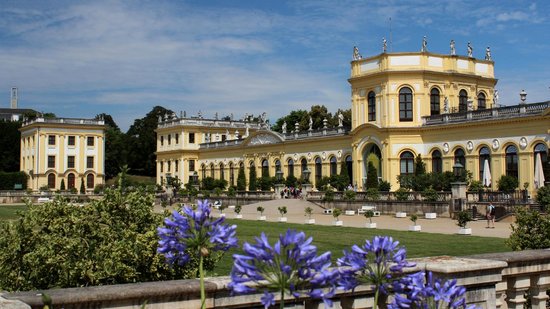
  • Orangery (10-17 Tue-Sun; 3€/ 2€/ free  adults/ reduced/ people under 18): building in the northern corner of Karlsaue that is home of the Cabinet of Astronomy and Physics and Planetarium. It was built from 1701 to 1710, under Landgrave Charles, and was also damaged during the Second World War. In the 1970s the Orangery was restored in the condition from 1872 (except that the interior is to a new design).
  • New Gallery of Kassel (10-17 Tue-Sun; 6€/ 4€/ free  adults/ reduced/ people under 18): art museum built between 1871 and 1877.
    Exhibition at the New Gallery
    It was damaged during the war (losing large parts of the collection) but it includes today a large collection of German Expressionists and contemporary art works from the 19th and 20th centuries with Romantic and Impressionist paintings such as Carl Schuch, Lovis Corinth and Max Slevogt. It also has a room containing sculptures by Joseph Beuys.
  • Grimm World Kassel (10-18 Tue-Sun; 10€/ 7€/ free  adults/ reduced/ kids under 6): multimedia adventure museum that houses an extensive exhibition on the life, works and creations of the Brothers Grimm. Using letters of the alphabet, The visitor is guided through exhibitions that have many multimedia exhibits, but also classic collection
    Museum for Sepulchral Culture
    elements up to areas that resemble an art exhibition.

  • Museum for Sepulchral Culture (10-17 Tue-Sun; 6€/ 4€/ free  adults/ reduced/ people under 18): museum that shows different exhibits on subjects about dying, death and dead remembrance, the only museum these topics in Germany. Visitors can see, among other things, gravestones, coffins, mourning clothing and jewelry, caskets, dolour costumes and tombstones. It has primarily testimonies of sepulchral culture from the German-speaking area from the Middle Ages to the present day.
  • Hessian State Museum in Kassel (10-17 Tue-Sun; 6€/ 4€/ free  adults/ reduced/ people under 18): museum that offers the visitor a tour throught the more than 300,000 years of human history in Hesse,
    Exhibition at the Hessian State
    Museum of Kassel
    from the beginnings of human settlement to the present day, with a collection of more than 6000 objects from the collections of prehistory, applied arts and folklore.
    It has a collection on applied arts, preserving most of the Hessian Landgraves' collection (including medieval sculptures,  jewelry, porcelain, the Hessian Coin Cabinet, altars, cabaret and sacred objects) as well as the largest folkore collection in Hesse, focused in traditional costumes, pre-industrial work, living and toys; or the German Wallpaper Museum, documenting the history of wallcovering and comprising around 23,000 objects. Its tower can now also be climbed, offering a beautiful view of Kassel.
  • Museum of Kassel (10-17 Tue-Sun; 4€/ 3€/ free  adults/ reduced/ people under 18):
    Museum of Kassel
    museum that shows a collection on the history of Kassel from the Middle Ages to the modern era, with particularly interesting insights into the time before the city's destruction in World War II.
    It houses some interesting models of the city, films on various topics about Kassel (shown every hour). There is a viewing room at the top and it has temporary exhibitions too.
  • Caricatura-Gallery for Comic Art (12-19 Tue-Sat, 10-19 Sun; 5€/ 4€  adults/ reduced): gallery gallery for comic art that belongs to the institution Caricatura (same as the Museums for Comic Art in Frankfurt am Main) and shows themed 
    Spohr Museum
    exhibitions by and with the most famous cartoonists, caricaturists and comic artists in Germany. 

  • Spohr Museum (10-16 Sat-Mon, by appointment Tue-Fri; free): museum dedicated to Louis Spohr (a German composer, violinist and conductor who lived from 1784 to 1859) that was considered one of the greatest violinists of his time and a very famous and influential Romantic composer that lived in Kassel, directing both the local orchestra and a violin school (attracting students from throughout Europe). It offers an introduction to the life of the musician, displaying its furniture, instruments and sheet music from his property, as well as dealing with the music through sound recordings.
  • Henschel Museum (14-17 first Sat-Sun of the month, on request; free): museum that is dedicated to the locomotive manufacturer Henschel & Sohn, a German company
    Technology Museum of Kassel
    located in Kassel and founded in 1810. It  was the largest in Germany by the 20th century, producing locomotives, trucks, buses, trolleybuses, armoured fighting vehicles and weapons (during World War II) too.
  • Technology Museum of Kassel (14-17 Wed-Fri, 11-17 Sat-Sun from Apr to Oct; 13-16 Wed-Fri, 11-16 Sat-Sun from Nov to Mar; 6€/ 5€/ 2€  adults/ reduced/ kids under 18): museum that shows an extensive collection of technical objects, precision tools, models, machines and motor vehicles. Highlights of the exhibitions are the Transrapid 05, the old rescue helicopter of Kassel Christoph 7, the steam locomotive 44 481, many old trams of Kassel and a 1:1 wood pattern of the first Henschel locomotive Drache.
    Stadthalle Kassel
  • Friedenskirche (14:30-16:30 Tue-Fri, 10:30-12:30 Sat): Lutheran church built between 1905 and 1908 by Johannes Roth (who built also the Christuskirche). After the war it was damaged and only sparsely repaired in the 1960s. The little Apostelkapelle belongs to the Friedenskirche too.
  • Stadthalle Kassel: Neoclasscial building whose initiative for the construction went back to Sigmund Aschrott (who made it available to his hometown free to have a cultural center for the citizens of Kassel), inaugurated in 1914. It was only slightly damaged in World War II.
    Federal Social Court
  • Federal Social Court: building in the style of Nazi architecture from the 1930s that is home of the German federal court of appeals for social security cases (mainly cases concerning the public health insurance, long-term care insurance, pension insurance and occupational accident insurance schemes).
  • Christuskirche (12-15 Tue-Fri, 9:00-12 Sat): Lutheran church between 1902 and 1903 by Johannes Roth. Its main feature is the Kaiserloge, a Imperial Lodge built for Kaiser Wilhelm II and his wife Auguste Viktoria (only she used the Kaiserloge and visited the services).
    Bergpark Wilhemshöhe
  • Bergpark Wilhelmshöhe: a 2.4 km² mountain landscape park that is the largest in Europe and 2nd largest park on a mountain slope in the world. Originally it was planned to be a mixture of a Baroque style Italian garden under Landgrave Charles I of Hesse-Kassel, evolving later into a French formal garden and later re-arranged into an English landscape garden. The park contains loads of features which are mainly fake Greek temples, fake medieval castles, quarries, lakes... One of its highlights is Hercules Monument (10-17 Tue-Sun from Apr to Oct ), a 18th century monument designed by Giovanni Francesco Guerniero. It's topped with a copper statue depicting the ancient Greek demigod Heracles (based on a 3rd century Farnese Hercules statue) created by the goldsmith Johann Jacob Anthoni,
    Hercules Monument
    located at the top of a pyramid (which stands on top of the octagon
    ). The monument is placed in the highest point of the mountain, towering over the city and becoming its landmark
    . Below the statue are located the Cascades, a fake waterfall, and the fake Roman Aqueduct. The park complex has been a UNESCO World Heritage Site since 2013. Its museums can be entered with the daily Tagesticket Wilhelmshöhe (6€/ 4€/ free  adults/ reduced/ kids under 18).
  • Wilhelmshöhe Palace (10-17 Tue-Sun): Neoclassical Schloss in Bad Wilhelmshöhe that was built for Landgrave Wilhelm IX of Hesse in the late 18th century and extensively used by Emperor Wilhelm II
    Wilhelmshöhe Palace
    as a summer residence and personal retreat
    . It was partially destroyed in WW2, rebuilt in a brilliant way and made
    part of the UNESCO World Heritage Site Bergpark Wilhelmshöhe since 2013. Today the palace houses the art gallery Gemäldegalerie Alte Meister, an art gallery based in the collection of collection of William VIII, Landgrave of Hesse-Kassel, that includes one of the world's largest Rembrandt collections and works by Caravaggio, Rubens Frans Hals or Jan Steen. Some of its highlights are Bildnis der Elsbeth Tucher by Albrecht Dürer, Portrait of a General by Titian, Jacob Blessing the Sons of Joseph by Rembrandt, Joseph and Potiphar's Wife by Bartolomé Esteban Murillo
    Rooms at Weißensteinflügel
    or the Kneeling Leda with Her Children by Giampietrino. The
    south wing is the Weißensteinflügel (10-17 Tue-Sun from Apr to Oct; 10-16 Fri-Sun from Nov to Mar), a part of the palace complex from 1780s that, in contrast to the rest of the palace, wasn't destroyed during the WW2. It used to accommodated the landgrave’s living quarters and representative rooms and today visitors can walk trough 23 of the historic palace rooms.
  • Löwenburg (10-17 Tue-Sun from Apr to Oct; 10-16 Fri-Sun from Nov to Mar): Schloss designed by Heinrich Christoph Jussow between 1793 and 1801 that, although it seems on the first view the romantic castle ruins of a knight from the Middle Ages
    Löwenburg
    , is a pleasure palace for built Landgrave Wilhelm IX of Hesse-Kassel (he was buried here in 1821 too). The castle is one of the first significant buildings of the Neo-Gothic architecture in Germany. It was damaged buring WW2 and having been rebuilt after the war. Inside the palace visitors can inspect armours, weapons and its Baroque rooms.
  • Nordshausen Monastery Church: monastery church, considered the oldest church in Kassel, that was mentioned for the first time in the year 1257. It used to be a women Cistercian convent  Cistercian in the former town of Nordshausen that was abandoned when the Reform was introduced in Hesse. It has an excellent accustic and every month there are concerts in the old church.

Hofgeismar Town Hall and square
Going north from Kassel it can be found some nice towns. One of them is Vellmar (
18,207 inhabitants), a town by river Ahne on the outskirts of Kassel. The thing to do here is walking in Ahnepark, a landscape park that offers water areas and sporting and cultural facilities. Continuing 20 km north the visitor reaches Hofgeismar. The town has many nice buildings like the Hofgeismar Town Hall, a 18th century Baroque style town hall (on the old cellar vault of the former town hall from the 14th century), or Hochzeitshaus (a later Renaissance style building from 1620, used as meeting point for the town's guilds and guilds, rebuilt in Neoclassical style after a fire in 1850). It can be visited the Hofgeismar Pharmacy Museum (15-18 Wed, Sun; free), a small museum on drug production place at Steinere Haus, one of the oldest buildings in Hofgeismar (1239). The town has many churches, some of the best ones are: Hofgeismar Old Town Church (8-18; free), Gothic Lutheran church first built in the 12th century (still one of the most important Gothic churches in Hesse) that has Hofgeismarer Passionsaltar, a beautiful altarpiece from 1310; Hofgeismar New Town Church, church from the 14th century that was used both by the German-Reformed and the French-Reformed community; St. Peter Catholic Church (8-18; free),
Sababurg

a Neo-Gothic style church from the late 19th century, located at the former entrance to Kassel Gate; and Carlsdorf Hugenottenkirche, church built between 1699 and 1704 according to plans by Paul du Rys (being the oldest Huguenot church in northern Hesse) with a richly decorated entrance portal and French inscriptions on the crossbar, with no altar
. Around Hofgeismar it can be visited Beberbeck Palace, a Neoclassical Schloss from the 1830s, designed by Johann Conrad Bromeis under the reign of Friedrich Wilhelm I, where it's particularly worth seeing the domed hall; the complex has a small park too. The other important palace is Sababurg (8-19 from Apr to Sep; 9-17 Oct and Mar; 10-16 from Nov to Feb; 9€/ 5.50€  adults/ students and kids under 16), a Schloss that was built in 1490, known as the Sleeping Beauty Castle (the fairy tale Sleeping Beauty by Brothers Grimm is said to have taken place here), that was secured after WW2. It hosts a hotel, a restaurant and Sababurg Zoo, considered one of the largest and oldest wildlife parks in Europe (1571).
Trendelburg Castle
Close to Sababurg the visitor can reach Trendelburg (
4,892 inhabitants), a town that is also part of the German Timber-Frame Road because it has a beautiful old town. Some of the things to do here are visiting the religious St. Marien Lutheran Church, late-Gothic church built in 1458 that was for centuries where the von Stockhausen family's hereditary burial was located, having beautiful uncovered wall paintings; or Gottsbüren Lutheran Church, a Gothic pilgrimage church built in the 1330s where it took place the miracle of Gottsbüren (alleged discovery of the holy body of Christ). The most important secular buildings are Trendelburg Town Hall (half-timbered building built in 1582 with a Gothic entrance portal) and, on the outskirts of the town, there's Trendelburg Castle, a Burg built in the 13th century, considered the landmark of Trendelburg, that after the end of the Thirty Years' War Landgrave Carl expanded into a fortified hunting lodge. Today it has a hotel, a restaurant and the Rapunzel Tower (daily 11; free). Another interesting places are Stammen Palace, a Neoclassical Schloss by Christoph Friedrich Rabe von Pappenheim and his wife Florentine Sophie Florentine Anna du Bos du Thil in the 18th century, and Deiseler Tunnel, a tunneñ from the 1840s that is oldest railway tunnel in Hesse and part the oldest railway line in Hesse.
Bad Karlshafen

Continuing north it can be reached the northernmost town in Hesse, Bad Karlshafen (3,644 inhabitants), a Weser Baroque spa town founded by French Huguenots in the confluence of the Diemel and Weser rivers. Its townscape in Baroque style and historic port are well worth a walk to be discovered.One of the most interesting things to do here is learning about French Huguenots (the beginnings of the movement, the religious wars and persecution) and their relationship with Hesse at the German Huguenot Museum (10-17 Tue-Fri, 11-18 Sat-Sun from Apr to Oct; 10-12 Mon-Fri from Nov to Mar; 4€/ 2€  adults/ reduced).  Other sightseeing points in Bad Karlshafen are Bad Karlshafen Town Hall (Baroque building from the 1710s designed by Friedrich Conradi with a mirrored stucco ceiling by Andrea Gallasini), Huguenot Tower (tower built in 1913 by Johann Joseph Davin in memory of his Huguenot ancestors that provides a beautiful view of Bad Karlshafen and the confluence of the Diemel into the Weser). Outside the town it can be visited the Ruins of Krukenburg (10-18 from Apr to Oct; 1.50€), remains of a castle built in the 13th century to protect a church (from 1126), or enjoy the views from Weser Skywalk, a viewing platform on the easternmost of Hanoverian Cliffs and Hessian Cliffs, near the triangle North Rhine-Westphalia-Lower Saxony-Hesse, that is up to 80 m above the Weser rise.


Marktplatz and Holleum
In case of going east, not far from the border with Lower Saxony and 25 km far from Kassel
, it's located Hessisch Lichtenau (12,431 inhabitants). It has an Altstadt with some half-timbered houses (with the picturesque Marktplatz as the main highlight) and remains of the city wall. The most interesting site in the town is Holleum (15-17 Sun, 10-18 Sun; 2€/ 1€  adults/ reduced), a small museum, located in the half-timbered old town hall, with an adventure exhibition about the fairy tale of Frau Holle. Other things to do here are walking Frau Holle Park, a large park with abstract works of art and 20 plaques with quotes from the fairy taleof Frau Holle (that has a monument too), or entering in the Hessisch Lichtenau Modellbahnland (14:30-18 Fri-Sat, 10-18 Sun; 5€/ 3€  adults/ reduced), a small exhibition of mockups with trains. Only 20 km north, and 30 km far from Göttingen, there's Witzenhausen (15,126 inhabitants), a town that is located in a cherry-growing area. The old town consists of a well-preserved, almost closed half-timbered ensemble (with a nice Marktplatz) and it also have remains of the former city fortifications with towers like Schalenturm, Diebesturm (9-20 from Apr to Oct; free), from where having nice views of the town, and Eulenturm. The two most important churches in Witzenhausen are Liebfrauenkirche (a Lutheran church that was first built in the 13th century, with the tower of the church dating back to those years) and modern Erlöserkirche.
Berlepsch Palace

Here it can be visited the Witzenhausen Ethnology Museum (15-17 Wed, Sun from Apr to Oct), a museum that shows objects of daily life from agriculture and household, including exhibits that come from Africa, South America and Oceania; German Institute for Tropical and Sub-Tropical Agriculture (15-17 Wed, Sun from Apr to Oct), institute has been the successor to the German Colonial School for Agriculture, Trade and Commerce, whose aims was to equip the emigrants for the German colonies with agricultural knowledge. This institute had a greenhouse that is now the Tropical Greenhouse of the University of Kassel (14-16 Wed, Fri-Sun; free). Close to Witzenhause there's Berlepsch Palace (10-17 Wed-Sun;
4€/ 3€  adults/ reduced), a three-wing Schloss complex, only a few hundred meters from the state border with Lower Saxony, that was built for Berlepsch family in the 15th century and that was modified along time (mainly using Hanoverian Neo-Gothic style). It was visited by Goethe in 1801; the complex has an English garden too and currently is used as a hotel and restaurant.

What can I do and buy in Kassel?

Kurhessen Therme
The city of Kassel has an important cultural life that the visitor can discover, mainly located at Kassel State Theater (Friedrichsplatz 15). There are still some baths that are worth a try such as
Kurhessen Therme (Wilhelmshöher Allee 361), a Japanese style thermal baths that are considered one of the most beautiful thermal baths in Germany and the most popular in Kassel, or the public swimming pool Auebad Kassel (Auedamm 21). 
As for shopping, most of the good shopping places are located close to the Königsplatz.

Where can I eat in Kassel?
Kassel has an important offer of restaurants and places to eat with different prizes. The most recommended ones are, for example, the Mexican restaurant Bolero (Schöne Aussicht 1a), the restaurant Eckstein (Obere Königsstraße 4), the Greek restaurant Ilyssia (Lange Straße 83), the German restaurant Brauhaus Zum Rammelsberg (Rammelsbergstraße 4) or the German restaurant Gutshof (Wilhelmshöher Allee 347a). There are alsosome very cute cafes such as Café Nenninger (Friedrichsplatz 8) or Café Lange (Friedrich-Ebert-Straße 72).

The nightlife of Kassel is mainly located around Friedrich-Ebert-Straße, having nice places such as the bar Lolita Bar (Werner-Hilpert-Straße 22), the club Unten (Wolfhager Straße 39a) or the discoes York Kassel (Obere Königsstraße 4) and Musikpark A7 (Miramstraße 74). There are also good beer gardens such as Biergarten Rondell (Steinweg 6) or Backstube (Kochstraße 16).

 
Design by Wordpress Theme | Bloggerized by Free Blogger Templates | free samples without surveys