Sunday, 15 September 2019

Viveiro

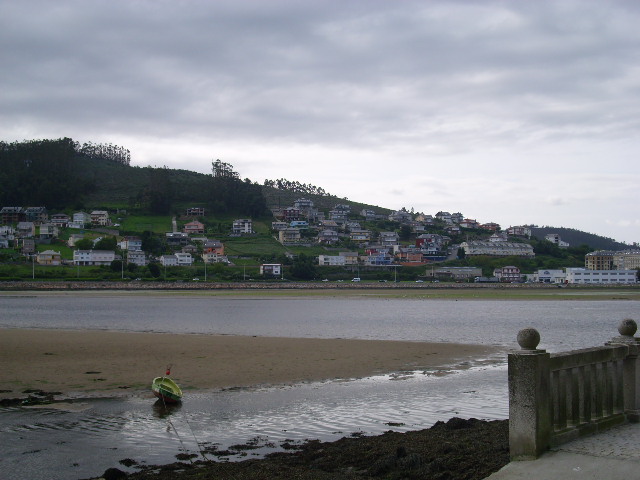
Viveiro (Vivero in Spanish) is a 15,510 inhabitants town located in the northwestern part of the province of Lugo, in the north of Galicia and Spain, in the ria de Viveiro (that belongs to Rías Altas). It's the third largest municipality in the province and a wide cultural offer that goes from Semana Santa to Rapa das Bestas in Candaoso or Romería de Naseiro. It's also home of Resurrection Fest, a heavy metal and punk festival.
 

How do I arrive to Viveiro?

  Viveiro isn't bad comunicated, despite its geographic position, because of the importance of tourism and the fact that is located between other bigger cities. 
  • Train: Viveiro is connected with Ortigueira (aprox. 40 minutes), Ribadeo (aprox. 1 hour), Ferrol (aprox. 2 hours) and Oviedo (aprox. 5 hours) by FEVE, with more than 3 daily trains.
  • Bus: there are buses to Viveiro from Ferrol (aprox. 1 hour 40 minutes), Lugo (aprox. 2 hours), A Coruña (aprox. 2 hours 15 minutes) and from Ribadeo.
  • Car: in case you decide renting a car, Viveiro is 40 minutes from Ortigueira, 1 hour from Mondoñedo and Ribadeo, 1 hour 10 minutes from Ferrol, 1 hour 15 minutes far from Lugo and 1.5 hours journey from A Coruña.

History

There have been found archaeological ruins and objects that make experts think that the area was inhabited during Roman times, with currenty Viveiro corresponding to Flavia Lambris. When the Arabs reached the Iberian Peninsula it was destroyed but Pelagius of Asturias gave Viveiro privileges for its help during Reconquista. From the 12th century  onwards it starts developing just the way Viveiro is nowadays. During the Irmandiña Wars Viveiro's mayor, Pero Pardo de Cela, was expelled from the town. The 16th century was the period of highest development of Viveiro as a town and harbour. In the 19th century many salting plants start to been set up in Viveiro and had an important cultural life, thanks to the minister and writer Nicomedes Pastor Díaz. During Primo de Rivera's dictatorship the area suffered some repression but peace came back with the Second Spanish Republic (unlike in other places, religious expressions weren't attacked).

What can I visit in Viveiro?

Viveiro is a town whose historic quartier is well-preserved where time seems to be frozen.
These are Viveiro's main attractions:
  • Charles V's Gate: former entrance gate to Viveiro built in Spanish Renaissance style in 1548. It was used to protect the Old Town from French troops during the Peninsula War.
  • The town has other gates that date back to the 13th century: Valado Gate and Santo Cristo Gate.
  • St. Maria do Campo Church (11:30-13:30 and 18:30-20; free): oldest and purest Romanesque style church in Galicia, built in the 12th century. Inside there's an interesting 14th century silver processional cross.
  • St. Francisco Church (11:30-13:30 and 18:30-20; free): church of a former Franciscan convent from the 13th century, rebuilt in Galician Gothic style. It has a beautiful apse and large and narrow windows.
  • St. Roque Mount: mount 3 km far from the town center that has a great panoramic view of the sea and the bay.
  • Nuestra Señora de Valdeflores Monastery: 15th century monastery that was inhabited by nuns till 2018. It has a nice Gothic church within the monastery
  • Viveiro has some very nice beaches with white sand and dunes like Da Area Beach (where some Phoenician remains were found), Esteiro Beach and Covas Beach. They are windy beaches so surf and windsurf can be practised there.
  • Going 8 km south from Viveiro there's Chavín Eucalyptus Forest, one of the oldest eucalyptus forests in Galicia and in Europe. There are many centenarian trees like O Avó, the largest eucalyptus in Europe.
Covas Beach
St. Maria do Campo Church
Best Bank of the World and Loiba Cliffs
Going 20 km west there's Bares Peninsula, compouned of the parishes of O Barqueiro (El Barquero in Spanish) and Porto de Bares (Puerto de Bares in Spanish), a marvellously scenic spot in Galicia with beautiful walking trails, beaches and cliffs. In Punta da Estaca de Bares, the most northernly point in Spain, there are the wonderful Loiba Cliffs, Picón Beach and a bench located on the top of the cliffs named Best Bank of the World. Continuing the way by the coast 17 km there's Ortigueira, a 5,966 inhabitants town with a small Old Town and nice beaches. But the most important thing here is Ortigueira's Festival of Celtic World, a very popular festival that draws more than 100,000 people attracted by its concerts, workshops and conferences. Before reaching Ferrol it can be found the parish of Santo André de Teixido (San Andrés de Teixido in Spanish) where many people go on pilgrimage to visit its church, a marine-style Gothic temple. It's located in one of the biggest cliffs in Europe.

Where can I eat in Viveiro?

In Viveiro there isn't a very wide offer to eat but a choice to eat local are O Recuncho (Rúa Pastor Díaz 55) and Asador La Quinta (Rúa Pastor Díaz 66). Other ideas can be the restaurants Pazo da Trave (Estrada do Galdo 0), Nito (Estrada da Area 1)
In our way to Ferrol we can also find some nice places to eat like the restaurants La Marina (Avenida Muelle 7) and O Forno (Porto do Barqueiro 1) in O Porto do Barqueiro; La Marina (Rúa Marina de Guerra 12), in Porto de Bares.

Friday, 13 September 2019

Mondoñedo

Mondoñedo is a 3,639 inhabitants town located in the inner part of the area called Mariña Lucense, the seaside in Lugo province, in northeastern part of Galicia, Spain. Mondoñedo was designed conjunto histórico in 1985. It's part of the Northern Way of St. James and it's also the birthplace of Álvaro Cunqueiro, one of the most important writers in Galician that also wrote in Spanish. 


How do I arrive to Mondoñedo?

  Mondoñedo isn't quite well connected to other points of Galicia but it can still be reached easily from the nearest cities in Lugo province. 
  • Train: narrow-gauge railway FEVE connects Ribadeo four times everyday with Ferrol (aprox. 3 hours) and twice with Oviedo (aprox. 2 hours).
  • Bus: there are daily buses that reach Mondoñedo from Viveiro (aprox. 1 hour), Lugo (aprox. 1.5 hours), from A Coruña (aprox. 1 hour 45 minutes) and from Santiago de Compostela (aprox. 2 hours 20 minutes). There are also eight daily buses from Ribadeo to Viveiro (aprox. 1 hour), daily buses to A Coruña, Lugo and Santiago de Compostela. It has also four daily buses to Ribadeo from Luarca and Oviedo, in Asturias
  • Car: going by car Mondoñedo is 30 minutes from Ribadeo, 55 minutes journey from Viveiro, 1 hour from Lugo and 1 hour 10 minutes from Ferrol. It's can also be reached from places of Asturias like Oviedo (aprox. 1 hour 40 minutes).

History

There are archaelogical remains that say that the valley where Mondoñedo is located was inhabited since Neolithic period. This area is very linked to Great Britain because Britons arrived here around the 5th century, like bishop Mailoc. The first time when Mondoñedo was mentioned was when the queen Urraca changed the episcopal see from San Martiño de Mondoñedo to Vilibria, current town of Modoñedo. King Alfonso VII gave Mondoñedo the title of city but the episcopal see was changed to Ribadeo to promote the growth of this town (1182-1230). One of the most important facts that took place here is the beheading of marshal Pardo de Cela (who obtained Isabella I of Castile's pardon but whose opposers managed to stop the messengers with the sacred pardon). Mondoñedo was capital city of a province till 1833.

What can I visit in Mondoñedo?

Mondoñedo is quite small but has a nice Old Town around the cathedral, rúa do Progresso and praza do Concello. It has a beautiful Renaissance fountain, Fonte Vella.
These are Mondoñedo's main attractions:
  • Mondoñedo Cathedral (10-14:30 and 15:30-19 Mon-Thu; 10-19 Fri-Sat; 14-19 Sun; 4.50€/ 4/ 3  adults/ retiree/ students): 13th century Romanesque style cathedral with pinnacles added in the 18th century. Inside it has a Barroque altarpiece in the Romanesque choir, Barroque chapels and a beautiful 18th century organ. It's most impressing piece of art is the Gothic fresco Degollación de los inocentes and it's also curious it has an English Virgin Mary that dates back to the 16th century.
  • Mondoñedo Diocesan and Sacred Art Museum (10:15-13:50 and 16:15-18:30 Tue-Sat; 10:15-11.45 and 16:30-19:50 Sun; 2€ with guided tour): interesting museum with the finest goldsmithing of the cathedral's treasure as well as paitings and sculptures. Maybe the most interesting piece is a Madonna and Child from the 13th century.
  • Mago Merlín Museum: library-museum founded by Manolo Montero that is consagrated to Álvaro Cunqueiro and Galician magic.
  • St. Catalina Royal Seminary: 16th century seminary which is said to be one of the best in the whole Way of St. James. It's one of the first of its kind built in Spain.
  • Nuestra Señora dos Remedios Sanctuary (open during mass): 18th century church with a beautiful Baroque altarpiece.
  • 8 km far from Mondoñedo there's St. Salvador Church (only available with guided tour), church with an impressing façade done by Casas y Novoa (Santiago de Compostela cathedral's façade architect). Inside there's a great Baroque style altarpiece.
Mondoñedo Cathedral

Nuestra Señora dos Remedios Sanctuary

Praia das Catedrais
Going 35 km north it can be found Ribadeo (9,972 inhabitants), a seaside resort located by the Cantabric Sea and on the border between Galicia and Austurias that owns an interesting harbour and a nice Old Town. The route between Ribadeo and Viveiro by the coast is very beautiful, with a combination of cliffs and sand beaches. Just 10 km west from the town there's the famous and awesome beach Praia das Catedrais (from Jul to Sep it's needed a authorization; free), a 1.5 km stunning beach with Gothic-looking rock towers, archers and chamber carved by the sea (it's consideredd one of the 5 most impressing Spanish beaches). It's recommended not visiting it when it's under water (1-2 hours either side of high tide). Continuing in direction Viveiro there's the resort town of Foz, small town with a beautiful beach and specially popular in summer. On the outskirts of this town it can be found St. Martiño de Mondoñedo Church (11-14 and 16-20), an 12th century church which is probably the first one founded by Britons who escaped from England around the 5th or 6th centuries. According to the legend, bishop Gonzalo made the Vikings (who were planning to attack the area) run way from here. Keeping our way 14 km from Foz there's town of Burela, main Galician harbour in tuna fishing and tuna canned. Four km from here there's the pottery factory Sargadelos (10:30-14 and 16:30-20 from Jun to Sep; 10:30-14 and 15:30-18 from Oct to May; free), an interesting exposition about this pottery with geometrical decoration that is very linked to Galician 20th century art

Where can I eat in Mondoñedo?

Mondoñedo has a very typical dessert called tarta de Mondoñedo, a cake with almond and spaghetti squash jam. It's sold, among others, in La Alianza (rúa do Progresso 22) or O Rei das Tartas (praza da Catedral 15). Mondoñedo is a small town so there isn't a large number of places to eat.
Ribadeo has an important culinary offer, with some nice restaurant with low-medium prize like La Botellería (rúa San Francisco 24) and taberna Antón (rúa San Francisco 38). For higher budgets other choices are the restaurant O Cabazo (rúa Río do Amalló 1) and the seafood restaurant San Miguel (porto deportivo).

Sunday, 1 September 2019

Vigo

Vigo is a 295,323 inhabitants city located in Rias Baixas and being the most populated city in Galicia and the 14th in Spain. It's also the city with largest population which isn't capital or province or region. Vigo metropolitan area is the 12th largest of Spain, with 479,256 people living here. Vigo metropolitan area is the 12th largest of Spain, with 478,256 people living here. It has its own university, airport, entities like the European Fisheries Control Agency or Atlantic Islands of Galicia National Park's site.

How do I arrive to Vigo?

  Vigo's economic importance makes it very well communicated with the rest of Galicia and of Spain. 
  • Plane: there are national connections with cities like Madrid, Barcelona, Bilbao and Málaga plus seasonal connections with United Kingdom, Ireland and Italy. There are buses connection Vigo and its airport every 30-60 minutes for 1.35€ (one-way).
  • Boat: boats connect Vigo with some of the islands of Atlantic Islands of Galicia National Park.
  • Train: Vigo has two stations. From Vigo-Urzáiz station there are high-speed trains to Pontevedra (aprox. 15 minutes), Santiago de Compostela (aprox. 1 hour) and A Coruña (aprox. 1 hour 30 minutes). The other station, Vigo-Guixar station, has trains to these destinations plus, among others, trains to Ourense (between 1.5 and 2 hours), Porto (aprox. 2 hours 30 minutes).
  • Bus: there are many routes from Vigo Bus Station to Pontevedra (aprox. 1 hour), Ourense (aprox. 1.5 hours), Santiago de Compostela (aprox. 1.5 hours), among others. Vigo is also connected with other Spanish cities like Madrid (7-9.5 hours aprox.) four times per day. There are also two buses every day to Porto (aprox. 2 hours 30 minutes).
  • Car: if you rented a car, it's 30 minutes far from Tui and Pontevedra, 35 minutes from Baiona, 1 hour 15 minutes journey from Ourense and from Santiago de Compostela. It's also connected with Portugal via Viana do Castelo (aprox. 1 hour), reaching Braga (aprox. 1 hour 13 minutes) and Porto (aprox. 1 hour 40 minutes).

History

The land that nowadays is part of Vigo has been inhabited since Pre-history with more than 26 castros in its municipaly, the largest one in Monte do Castro. Roman trade was important in this area but it's still unknown if there was any important Roman population here (according to the legend Julius Caesar spent some days resting in Cíes Islands during the war against Lusitanians).Vigo's history during Middle Ages is blurry, with some Romanesque churches and bridges. From the 12th century Vigo started recovering population (based in sardine fishing and trade) but it was still less important than Baiona (due to its royal privieges). During the 16th century Vigo was attacked several times by Ottoman and English pirates (Francis Drake attacked it twice, being successful just once). In 1702 here takes places the Battle of Vigo Bay (where Dutch and English ships attacked boats that came from America with richness) and in 1719 the capture of Vigo during the War of the Quadriple Alliance. In the end of the 18th century businessmen arrive to Vigo and that increases the importance of trade on its economy, continued in the 19th century with its trade with South America and the growth of its harbour. Vigo was also occpied by the French army during the Peninsular War and here arrived in 1898 the injured Spanish soldiers who participated in the Cuban War of Independence. Vigo was in the 20th century the port where Galician people emigrate and, during WW2, where Nazi Germany boats were based. In the years of the Spanish miracle and onwards the population of Vigo grew extraordinarily.

What can I visit in Vigo?

Despite being an industrial city Vigo has an interesting Old Town with many tapas bars, around streets like praza de Compostela, praza da Constitución or city districts like A Pedra or O Berbés. There are nice streets to go shoping like rúa dos Cesteiros, that reaches praza da Almeida.
These are Vigo's main attractions:
  • Vigo Contemporary Art Museum (11-14:30 and 17-21 Tue-Sat; 11-14:30 Sun; free): art museum located in a 19th century prission with temporary expositions of reknown artists.
  • San Sebastián Castle: 17th century fortress built to protect Vigo from Portuguese and British attacks.
  • Francisco Fernández del Riego Art Gallery (18-21 Tue-Frie; 12-14 and 18-21 Sat; 12-14 Sun; free): gallery that displays works of arts of some of the main Galician artists in the 20th century like Xosé Laxeiro, Manuel Colmeiro, Manuel Lugrís or Luis Seoane. It also has temporary expositions.
  • Vigo Co-Cathedral (18-20 Mon-Sat): 19th century Neoclassic style cathedral with colourful mosaics on its inner walls (from the 1960s).
  • Monte do Castro Park: mount in the middle of the city that is used currently as a public park. From here there are good views of the Bay of Vigo and it can be seen one of the castros that was located in current Vigo, castro de Vigo, as well as another fortress, Castro Castle, from the 17th century and that was connected with San Sebastián Castle by tunnels.
  • Sea Museum of Galicia (10-14 and 17-19 Tue-Fri, 11-14 and 17-20 Sat-Sun from Jul to Sep; 11-14 and 17-20 Tue-Sun from Oct to Jun; 3€/ 1.50/ free  adults/ retiree and students/ kids under 8): huge museum dedicated to all the things related to the sea that is placed in a former canning factory. Its first part is dedicated to oceanographic investigation and its history (with many weird objects); and the second to fishing, a very important activity linked to Vigo (home of Europe's largest fishing fleet). It also has an aquarium with fish from this region and nearby there's a lighthouse with great views of the city.
  • Vigo City Museum (10-14 Tue-Sat; 17-20 Sat; 11-14 Sun; free): 17th century pazo that hosts this museum, also known as Quiñones de León Museum. Its rooms, furniture and paintings are very well preserved (specially Doré hall); there are also expositions about archaeology and important canvases by Goya or by Fragonard. It has a garden that currently works as public park.
  • Around Vigo there are some nice beaches like the touristic Samil Beach, a 1.2 km-long beach with views of Cíes Islands.
  • In the north of Vigo, 22 km northwest from it, we arrive to Soutomaior (Sotomayor in Spanish), a 7,305 inhabitants municipaly whose main attraction is Soutomaior Castle (10-20 from May to Sep; 10-19 Tue-Fri and 10-18 Sat-Sun from Oct to Apr; 5/ 2.50  adults/ retiree and students). This 14th century castle is very linked to Pedro Álvarez de Soutomaior, who organised a revolution against the Catholic Monarchs and the church, participating also in Irmandiñas wars. The castle has beautiful views and its 19th century garden is nice to walk.
Quiñones de León Museum
Sea Museum of Galicia

View of Monterreal Fortress and Monte Boi
Going 40 km south appears the town of Baiona (Bayona in Spanish), a 12,134 inhabitants resort municipality where the caravel La Pinta arrived in 1493, being the first European place to know the existence of the success of Christobal Columbus' journey. Baiona has an important Old Town full of 16th and 17th century houses close to the harbour front road, rúa Elduayen. The town's main monument is Monterreal Fortress (10-22 from Jul to Aug; 10-19 from Sep to Jun; 5/ 1  car/ pedestrian), fortress built between the 11th and 17th centuries located in Monte Boi with 3 km of walls and a nice trail that loops all over the mount. Nowadays it's home of a Parador, luxurous state-owned hotel, whose cafe terrace provides great views of the bay. Baiona has many other touristic attractions like caravel La Pinta (10-21 from Jul to Aug; 10-20 from Sep to Jun; 2), reproduction of the one that reached Baiona in 1493 leaded by Martín Alonso Pinzón, with all the objects and people that brought from America; former St. María Collegiate Church (10-13:30 and 17-20), church in a transition style from Romanesque to Baroque with beautiful rosette and portico; and St. Liberata Chapel (10-13:30 and 17-20), church with an unsual representation on its portico, a crucified female.

Where can I eat in Vigo?

One of the best places to eat here is Rúa Pescadería, with a large offer of fresh seafood like oysters. Some recommendations to eat in Vigo are The Othilio Bar (rúa Luis Taboada 9), Frank (), O Lagar (Rúa Igrexa 132) or Nautic (Rúa Igrexa 32). Higher prize there's the restaurant Follas Novas (rúa Serafín Avendaño 10).
There are many places to have a drink around Praza da Constitución or Rúa Areal like the concert halls La Iguana Club (rúa Churruca 14) or La Fábrica de Chocolate Club (rúa Rogelio Abalde 22).

 
Design by Wordpress Theme | Bloggerized by Free Blogger Templates | free samples without surveys