Friday, 20 September 2019

Cambados

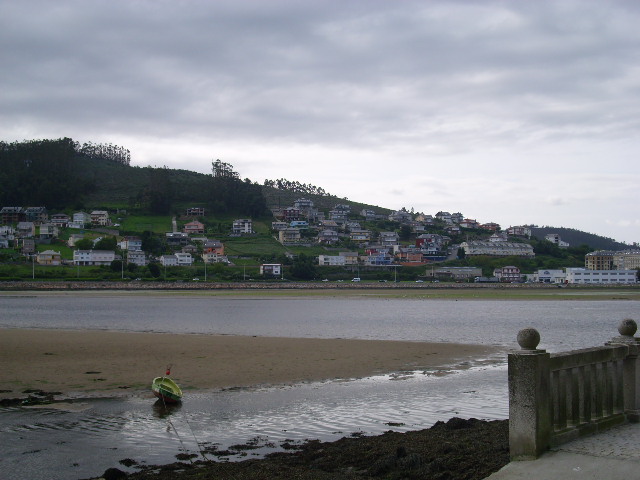
Cambados is a 15,510 inhabitants ria-side town, in the middle of Rías Baixas, in the western part of Galicia, Spain. It's also the capital city of albariño, the most popular Galician wine. Currently it's the fusion of three medieval towns: Fefiñáns, Cambados and Castrelo. It was named European City of Wine in 2017.

How do I arrive to Cambados?

  Cambados isn't bad comunicated because of the importance of tourism and the fact that is located between Pontevedra and Santiago de Compostela. 
  • Bus: . There are 2-3 buses to O Grove from Santiago de Compostela (aprox. 2 hours 15 minutes) via Cambados (aprox. 30 minutes), Vilagarcía de Arousa (aprox. 1 hour) and Padrón (aprox. 1 hour 15 minutes) and 4-6 buses from Pontevedra (aprox. 1 hour 15 minutes) via Sanxenxo (aprox. 30 minutes). There are buses from Vilagarcía de Arousa (aprox. 30 minutes) and two daily buses from Pontevedra (aprox. 1 hour 15 minutes).
  • Car: in case you decide renting a car, Cambados is 30 minutes from O Grove, Combarro and Pontevedra, 40 minutes from Padrón, 45 minutes from Vigo, 1 hour from Santiago de Compostela and from Noia.

History

The area around Cambados was already inhabited during Phoenici exploration of the Galician coast and under Roman domination. After the kingdom of the Suebi was conquered by the Visigoths, the king Egica made his son Wittiza governor of Galicia, time in which he gave a lot of privileges to Cambados. When the Muslims attacked the Iberian Peninsula Abd al-Aziz attacked Cambados, Tui, Ourense and Lugo, but Fruela I of Asturias (son of Alfonso I of Asturias) beat them near Cambados. The town was formed by San Tomé do Mar and Santa Mariña parishes. As many other places in the Galician coast during the 9th and 10th centuries it was attacked by Normans. Cambados also took part in the Irmandiños war but the Catholic Monarchs gave the town privileges for its help during the conquer of Granada. The inhabitants of Cambados organised a guerrilla during the Peninsular War and waged guerrilla warfare Soult and Ney's armies. The birth of the town of Cambados with its current name occured in 1820.

What can I visit in Cambados?

Cambados is a town with a nice Old Town and a lot of wineries that can be visited and enjoyed. Some of its main streets are around praza de Fefiñáns. St. Tomé District, in the south of the town, is a traditional fishery quartier where enjoying traditional life and, during low tide, watch shellfish catchers work.
These are Cambados' main attractions:
  • Pazo de Fefiñáns (three daily guided tours; 7/ 10  guided tour/ tour plus wine tasting): pazo built in 1583 by Gonzalo de Valladares y Sarmiento, viscount of Fefiñáns and major of La Paz (Bolivia). It was modified in the 18th century and shows a combination of Renaissance and Baroque and hosts the oldest winery in the region. The visit shows the palace, the installations of the winery and its gardens.
  • St. Bieito de Fefiñans Church: 17th century church built over the ruins of a Romanesque chapel by Gonzalo de Valladares, with Churrigueresque style towers.
  • St. Margarita Chapel: 11th century chapel with a beautiful cruzeiro on its entrance.
  • St. Saduniño Tower: ruins of a 12th century defensive tower destroyed during Irmandiño revolts.
  • Etnographic and Wine Museum (10-14 Tue-Thu, 10-14 and 16-19 Fri-Sat; 1/ free  adults/ kids under 11): museum about the local relationship with wine and the characteristics of Rías Baixas Denominación de Origen (protected designation of origin), considered the main wine museum in Galicia. It's very useful for enologists and wine lovers.
  • St. Mariña Church: 16th century Galician Gothic style church in ruins that preserves its chorus and its serie of arches of its vault. It's surrounded by geraniums, hydrangeas and tombs, as the local cemetery is here.
  • There are activites that allow to understand the work of shellfish catchers (usually done by women) organised by Guimatur (5€).
  • Going 8 km east from Cambados there's Pazo Quinteiro da Cruz (8/ 10  guided tour of its gardens/ tour plus wine tasting), in the municipality of Ribadumia. This beautiful 18th century stone palace with a nice English garden full of camellias, a big hórreo, a private chapel and a winery. It has been used as set for films many times.
  • Thirteen km east it can be found St. María da Armenteira Monastery (9-21), 12th-13th century monastery and church in pure Cistercian style (only the façade and the cloisters are from the 18th century). Among its highlights are it's beautiful rose window, the Romanesque portico with 12 columns and the cloister. From here starts a relaxing trail called Ruta da Pedra e da Agua (6.8 km one-way).
Ruins of St. Mariña Church
Pazo de Fefiáns

Carreirón Natural Park
Around Cambados there are many things to do but you have to choose if going north or south. If you choose exploring the northern part it can be found the beautiful A Illa de Arousa (Isla de Arosa in Spanish), a municipality of 4,958 inhabitants located in Arousa island (which is conected with dry land by a bridge). The island has many nice beaches like Bao Beach, Camaxe Beach or Salinas beach, beautiful Punta Cabalo Lighthouse and in the southern part of Arousa island it can be found Carreirón Natural Park, a small pine wood reserve with some paths to tranquil coves and wetlands. In the beginning of September it takes places Octopus Festival, a good occasion In case you choose going to the south it can be found the town of O Grove (El Grove in Spanish), a 10,700 inhabitants municipality located in the peninsula with the same name. Some of the things to do here are the following ones: O Grove Aquarium (10:30-21 from Jul to Sep; 10-18 Mon-Fri and 10:30-19:30 Sat-Sun from Oct to Jun; 15/ 12/ 10/ free  adults/ retiree and students/ kids from 4 to 14 years old/ kids under 4), small and educational aquarium with fish, crustaceans and cephalopods from the region; Fishing and Salting Interpretation Center (10:30-13:30 Tue-Sun; 2/ 1  adults/ kids), salting factory founded in 1790 that is preserved just the way it was that shows objects related to traditional fishing, salting and canning.
A Toxa chapel
The peninsula has many beautiful fine sand beaches such as the long A Lanzada Beach; the beaches in the southern part of the peninsula are Area da Cruz beach, Raeiros beach and Paxareiro beach but in the northern part the beaches are unspoilt, for example As Pipas Beach, Mexilloeira Beach, Area Grande Beach or O Carreiro Beach; western beaches are also calm, like Castiñeira Beach, Barreiro Beach, Aguieira Beach or Con de Corva Beach. There's a trail called Os Lagarteiros (2 km) with some nice viewpoints of the peninsula on its way. Conected with O Grove is A Toxa island, island famous for its hydrothermal waters (that made it be a luxurous resort in the 20th century) and A Toxa chapel, a chapel covered with scallop shells.

Where can I eat in Cambados?

In Cambados the best idea is trying its wine, albariño. There are many wineries such as and restaurants like A Casa da Leña (Rúa Rodas 1), Casa Pintos (Rúa Montino de Arriba 14) and O Rincón do tio Paco (Praza Fefiñáns 13) and, for a higher prices, the Galician restaurants María José (Rúa San Gregoria 14) and Yayo Daporta (Rúa Hospital 7). Some places to try Cambados' wines are around praza Fefiñáns for example, Pub Brothers (Praza Alfredo Brañas), and some good ideas to buy wines like pazo A Capitana ()
O Grove is like Mecca for seafood lovers: it isn't cheap but it can't be fresher. Some ideas to enjoy seafood with a low-medium price are the restaurants Balcón de Floreano (Praza Darriba 11), Taberna Lavandeiro (Rúa Santo Antonio 2) or A Taberna de Temperan (Cacheiras 24). For a higher price the recommendations can be the shellfish bars Beiramar (Avenida de Beiramar 30) and A Solaina (Rúa do Cruceiro 8).
In A Illa de Arousa there are some cheap restaurants where eating like A Salga (Rúa O Naval 7) and A Meca (Paseo O Cantiño 12).

Sunday, 15 September 2019

Viveiro

Viveiro (Vivero in Spanish) is a 15,510 inhabitants town located in the northwestern part of the province of Lugo, in the north of Galicia and Spain, in the ria de Viveiro (that belongs to Rías Altas). It's the third largest municipality in the province and a wide cultural offer that goes from Semana Santa to Rapa das Bestas in Candaoso or Romería de Naseiro. It's also home of Resurrection Fest, a heavy metal and punk festival.
 

How do I arrive to Viveiro?

  Viveiro isn't bad comunicated, despite its geographic position, because of the importance of tourism and the fact that is located between other bigger cities. 
  • Train: Viveiro is connected with Ortigueira (aprox. 40 minutes), Ribadeo (aprox. 1 hour), Ferrol (aprox. 2 hours) and Oviedo (aprox. 5 hours) by FEVE, with more than 3 daily trains.
  • Bus: there are buses to Viveiro from Ferrol (aprox. 1 hour 40 minutes), Lugo (aprox. 2 hours), A Coruña (aprox. 2 hours 15 minutes) and from Ribadeo.
  • Car: in case you decide renting a car, Viveiro is 40 minutes from Ortigueira, 1 hour from Mondoñedo and Ribadeo, 1 hour 10 minutes from Ferrol, 1 hour 15 minutes far from Lugo and 1.5 hours journey from A Coruña.

History

There have been found archaeological ruins and objects that make experts think that the area was inhabited during Roman times, with currenty Viveiro corresponding to Flavia Lambris. When the Arabs reached the Iberian Peninsula it was destroyed but Pelagius of Asturias gave Viveiro privileges for its help during Reconquista. From the 12th century  onwards it starts developing just the way Viveiro is nowadays. During the Irmandiña Wars Viveiro's mayor, Pero Pardo de Cela, was expelled from the town. The 16th century was the period of highest development of Viveiro as a town and harbour. In the 19th century many salting plants start to been set up in Viveiro and had an important cultural life, thanks to the minister and writer Nicomedes Pastor Díaz. During Primo de Rivera's dictatorship the area suffered some repression but peace came back with the Second Spanish Republic (unlike in other places, religious expressions weren't attacked).

What can I visit in Viveiro?

Viveiro is a town whose historic quartier is well-preserved where time seems to be frozen.
These are Viveiro's main attractions:
  • Charles V's Gate: former entrance gate to Viveiro built in Spanish Renaissance style in 1548. It was used to protect the Old Town from French troops during the Peninsula War.
  • The town has other gates that date back to the 13th century: Valado Gate and Santo Cristo Gate.
  • St. Maria do Campo Church (11:30-13:30 and 18:30-20; free): oldest and purest Romanesque style church in Galicia, built in the 12th century. Inside there's an interesting 14th century silver processional cross.
  • St. Francisco Church (11:30-13:30 and 18:30-20; free): church of a former Franciscan convent from the 13th century, rebuilt in Galician Gothic style. It has a beautiful apse and large and narrow windows.
  • St. Roque Mount: mount 3 km far from the town center that has a great panoramic view of the sea and the bay.
  • Nuestra Señora de Valdeflores Monastery: 15th century monastery that was inhabited by nuns till 2018. It has a nice Gothic church within the monastery
  • Viveiro has some very nice beaches with white sand and dunes like Da Area Beach (where some Phoenician remains were found), Esteiro Beach and Covas Beach. They are windy beaches so surf and windsurf can be practised there.
  • Going 8 km south from Viveiro there's Chavín Eucalyptus Forest, one of the oldest eucalyptus forests in Galicia and in Europe. There are many centenarian trees like O Avó, the largest eucalyptus in Europe.
Covas Beach
St. Maria do Campo Church
Best Bank of the World and Loiba Cliffs
Going 20 km west there's Bares Peninsula, compouned of the parishes of O Barqueiro (El Barquero in Spanish) and Porto de Bares (Puerto de Bares in Spanish), a marvellously scenic spot in Galicia with beautiful walking trails, beaches and cliffs. In Punta da Estaca de Bares, the most northernly point in Spain, there are the wonderful Loiba Cliffs, Picón Beach and a bench located on the top of the cliffs named Best Bank of the World. Continuing the way by the coast 17 km there's Ortigueira, a 5,966 inhabitants town with a small Old Town and nice beaches. But the most important thing here is Ortigueira's Festival of Celtic World, a very popular festival that draws more than 100,000 people attracted by its concerts, workshops and conferences. Before reaching Ferrol it can be found the parish of Santo André de Teixido (San Andrés de Teixido in Spanish) where many people go on pilgrimage to visit its church, a marine-style Gothic temple. It's located in one of the biggest cliffs in Europe.

Where can I eat in Viveiro?

In Viveiro there isn't a very wide offer to eat but a choice to eat local are O Recuncho (Rúa Pastor Díaz 55) and Asador La Quinta (Rúa Pastor Díaz 66). Other ideas can be the restaurants Pazo da Trave (Estrada do Galdo 0), Nito (Estrada da Area 1)
In our way to Ferrol we can also find some nice places to eat like the restaurants La Marina (Avenida Muelle 7) and O Forno (Porto do Barqueiro 1) in O Porto do Barqueiro; La Marina (Rúa Marina de Guerra 12), in Porto de Bares.

 
Design by Wordpress Theme | Bloggerized by Free Blogger Templates | free samples without surveys